How to Prevent Rust on Cabinet & Door Hardware in Malaysia — Maintenance Guide 2026
Malaysia’s climate is the enemy of cheap hardware. At 80–90% relative humidity year-round, with average temperatures between 26–32°C and salt-laden coastal air in cities like Johor Bahru, Penang, and Port Klang, metal hardware corrodes faster here than almost anywhere in the world. Cabinet hinges develop rust spots within months. Drawer runners seize. Handles tarnish. Locks jam. And in most cases, it is not a manufacturing defect — it is the wrong hardware in the wrong environment without the right maintenance. This guide covers exactly how to prevent rust on cabinet and furniture hardware in Malaysian conditions, with practical steps for both new installations and existing hardware showing early corrosion.
Why Malaysian Conditions Accelerate Rust
Rust (iron oxide) forms when iron or steel reacts with oxygen and moisture. The rate of this reaction is directly proportional to humidity level and temperature — both of which Malaysia has in abundance. Specific factors that accelerate hardware corrosion in Malaysian homes and offices:
High ambient humidity: At 80–90% RH, even indoor hardware is in near-constant contact with atmospheric moisture. Air conditioning reduces humidity locally, but non-air-conditioned kitchens, bathrooms, laundry areas, and service yards are exposed to near-outdoor humidity levels.
Coastal salt air: Properties within 5–10km of the coast — including large parts of Johor Bahru, Georgetown, and Klang Valley near Port Klang — experience elevated salt (sodium chloride) in the air. Salt accelerates corrosion significantly by acting as an electrolyte that speeds the oxidation reaction. A hinge that lasts 5 years in a Kuala Lumpur city centre condo may corrode in 18 months in a beachfront property in Johor or Penang.
Condensation in kitchen and bathroom cabinets: Temperature differentials between air-conditioned rooms and warm, humid air flowing in from outside cause condensation to form on metal hardware surfaces — particularly on hinges and drawer runners at the back of cabinets adjacent to external walls.
Cleaning chemicals: Bleach-based cleaners (very common in Malaysian households for bathroom and kitchen cleaning) are highly corrosive to zinc alloy, chrome-plated, and even some stainless steel alloys. Regular exposure to cleaning sprays accelerates surface degradation significantly.
Which Hardware Materials Rust — and Which Don't
Understanding material properties is the first step to prevention.
Iron and mild steel: Rust rapidly in Malaysian conditions. Never specify bare mild steel hardware indoors in Malaysia. Common in very cheap imported hardware.
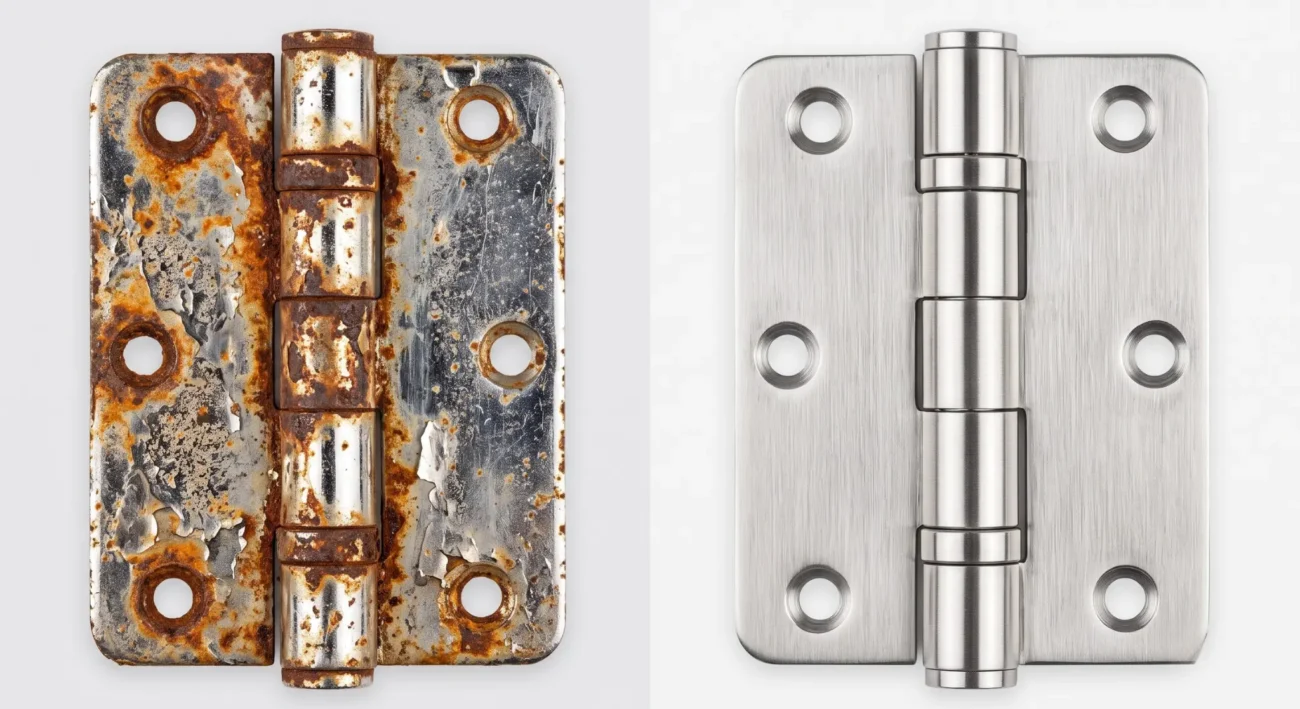
Chrome-plated steel: The chrome plating provides temporary protection, but once the plating is scratched or chips, the steel substrate underneath corrodes rapidly. Chrome-plated handles and hinges in bathroom and kitchen environments typically show corrosion at scratch points within 1–3 years.
Zinc alloy (Zamak): Does not rust (zinc does not form iron oxide) but does form white zinc oxide corrosion (white powdery deposits) in humid conditions. More resistant than chrome-plated steel but not ideal for bathrooms or coastal locations.
Powder-coated steel: The powder coat provides good corrosion resistance when intact. Once chipped or scratched, the underlying steel corrodes. Powder coating on hardware in high-humidity areas should be inspected annually and touched up with matching paint if damaged.
304 Stainless Steel: Highly corrosion-resistant in most Malaysian indoor environments. The chromium content forms a self-healing passive oxide layer that prevents rust. Suitable for kitchens, bathrooms, and humid utility rooms. Not recommended for direct salt spray exposure (within metres of the open sea).
316 Stainless Steel (Marine Grade): The gold standard for coastal Malaysian environments. Contains molybdenum in addition to chromium, providing superior resistance to salt corrosion. Specified for hardware in coastal properties, outdoor applications, and food-grade environments.
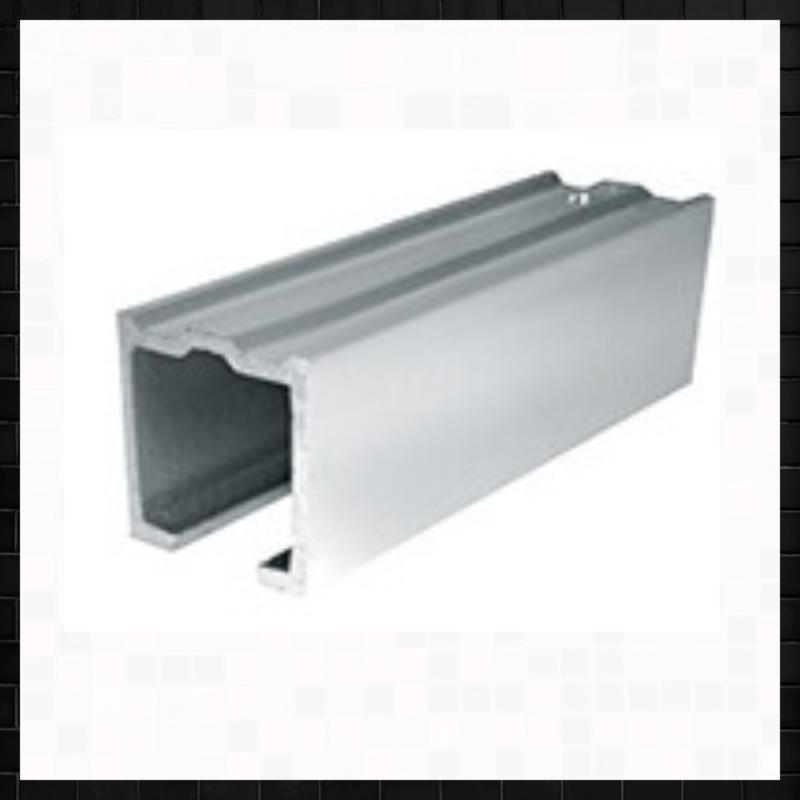
Aluminium: Does not rust. Forms a thin aluminium oxide layer that is self-protecting. Ideal for tracks, rails, and frames in humid Malaysian environments. Avoid contact between aluminium and dissimilar metals (galvanic corrosion can occur at contact points between aluminium and steel).
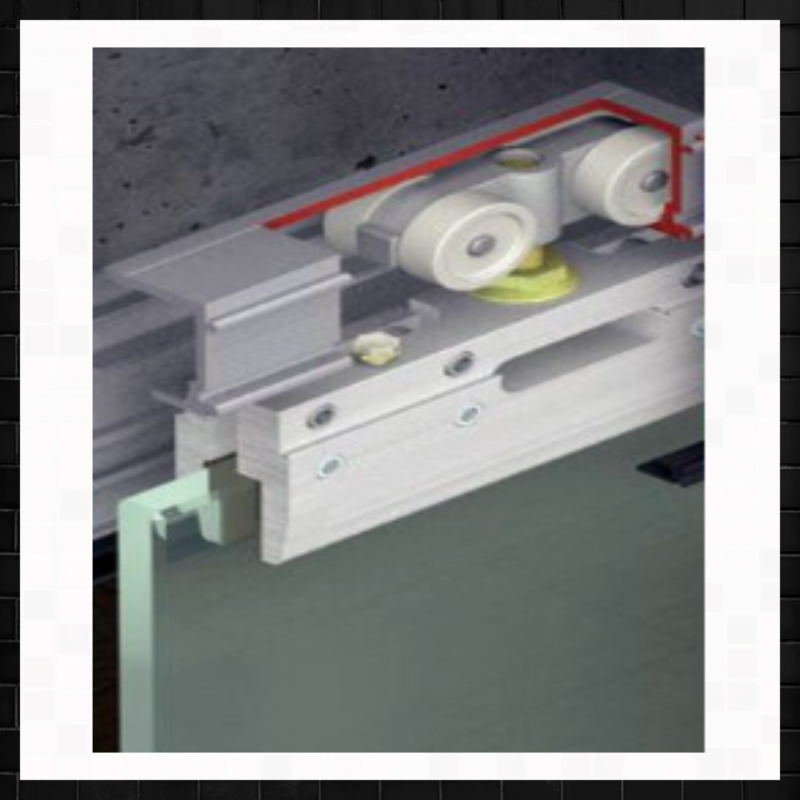
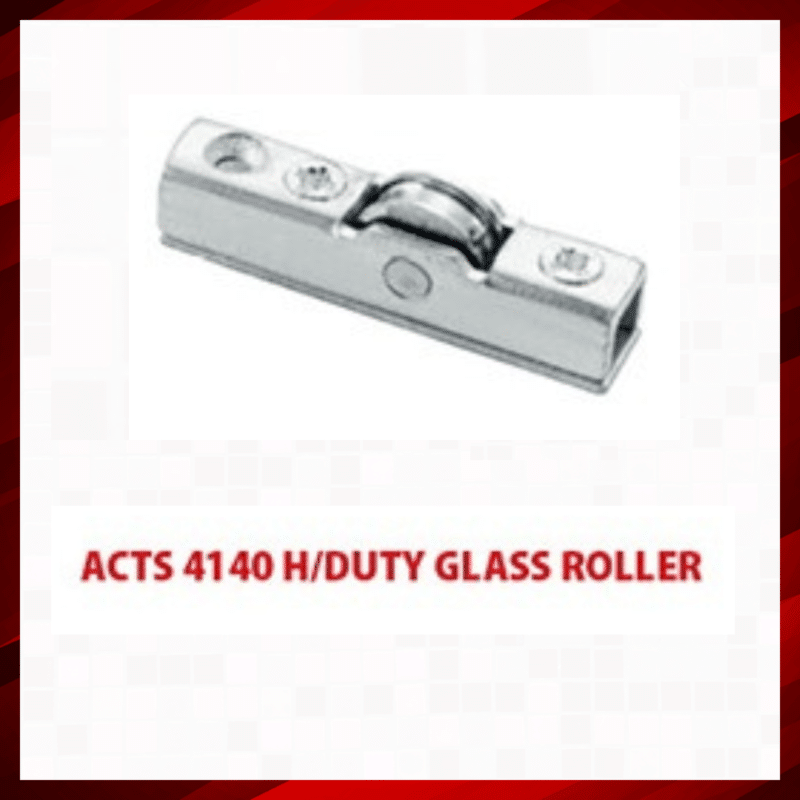
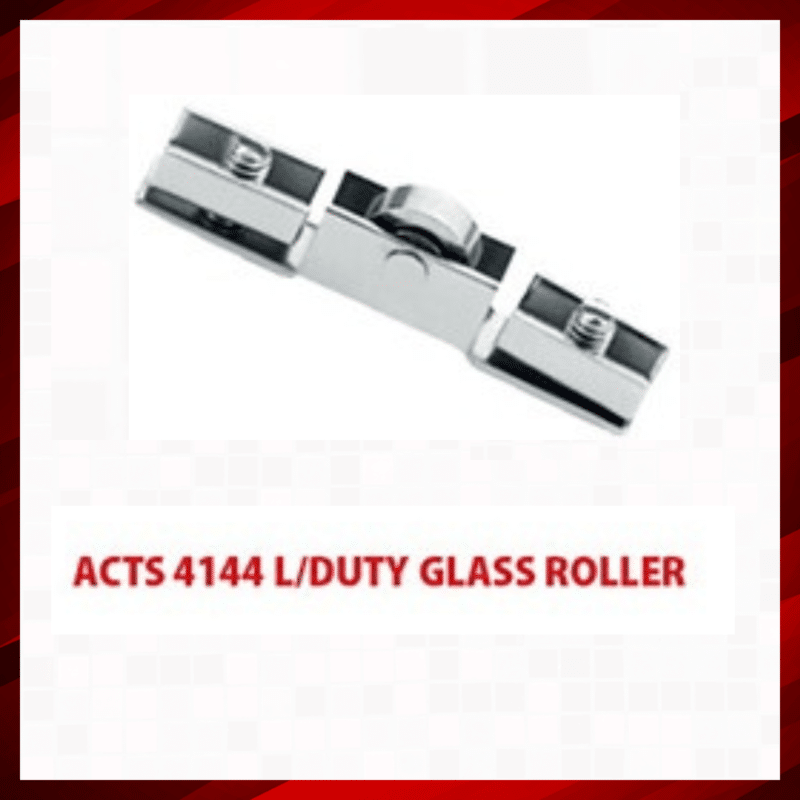
ACTS 4140 / 4144 GLASS ROLLER
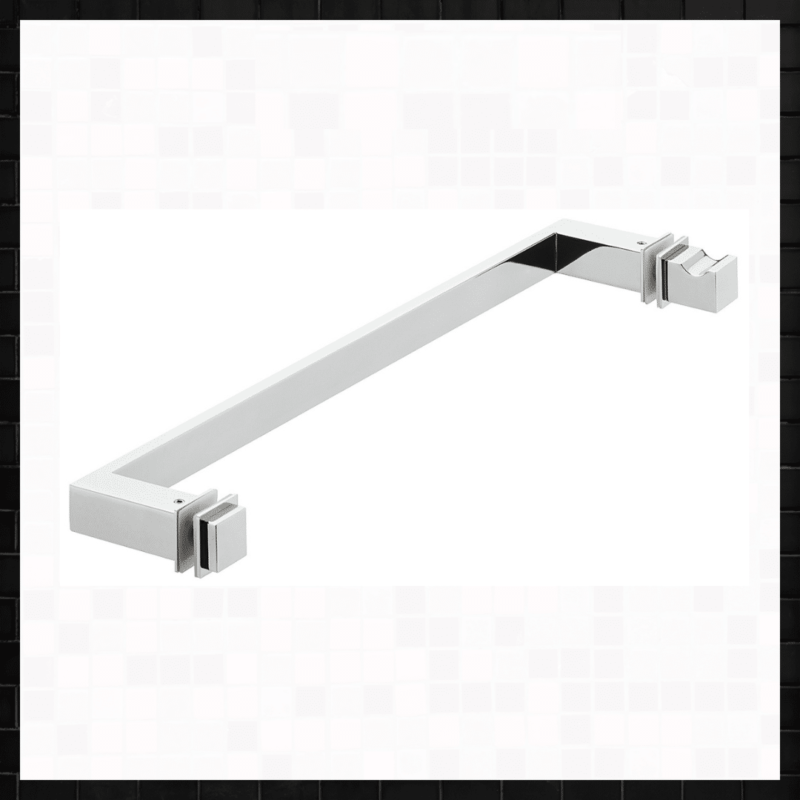
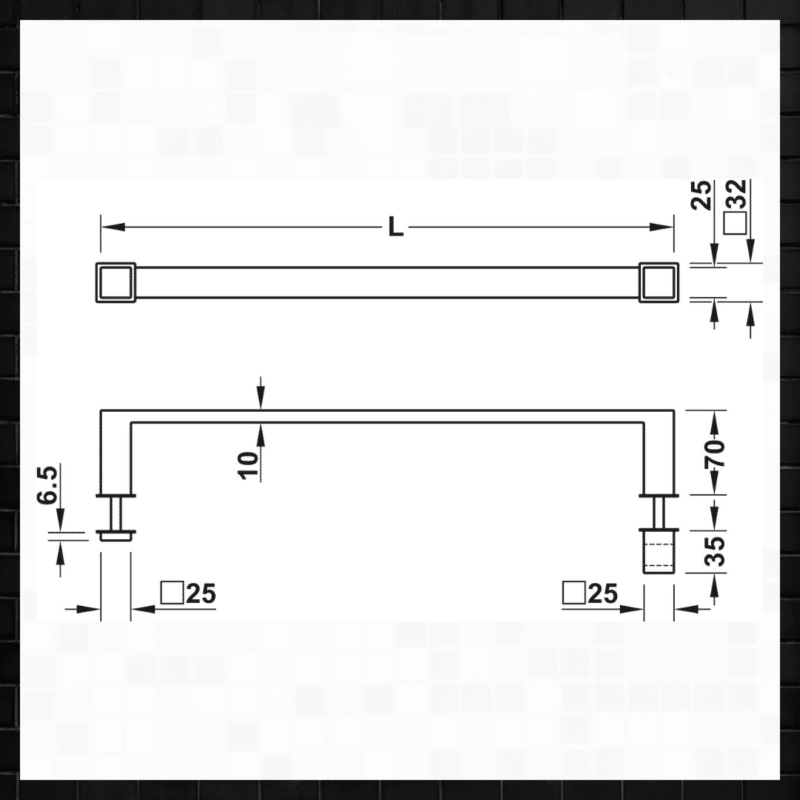
RM2.4 – RM3.3Price range: RM2.4 through RM3.3HAFELE Flush pull handle for sliding doors, Aluminium, one-sided, square
RM718.0 – RM786.0Price range: RM718.0 through RM786.0Prevention Step 1 — Choose the Right Hardware Material
The most effective rust prevention is specifying the correct material at the time of purchase. Retrofitting protection to the wrong material is always a second-best solution.
Kitchen cabinets (near sink and hob): Specify 304 stainless steel or powder-coated aluminium for all hinges, handles, and drawer runners. Avoid chrome-plated zinc alloy — the constant exposure to steam, water splash, and cleaning chemicals will degrade the plating rapidly.
Bathroom cabinets and vanity hardware: Specify 304 stainless steel minimum. For bathrooms with open showers or high direct moisture exposure, 316 stainless steel is the better specification. IP65-rated fittings for any hardware within the shower spray zone.
Wardrobe and bedroom hardware: In air-conditioned bedrooms, chrome-plated or zinc alloy hardware is acceptable. In non-air-conditioned bedrooms (common in Malaysian terrace houses for secondary rooms), specify powder-coated or stainless hardware.
Outdoor and semi-outdoor hardware (car porch, service yard, balcony): 316 stainless steel or hot-dip galvanised steel for structural hardware. Powder-coated aluminium for tracks and rails. No chrome plating, no zinc alloy, no mild steel.
Prevention Step 2 — Apply Protective Coatings at Installation
Even correctly specified hardware benefits from a protective coating applied at installation time — particularly on cut edges, screw holes, and contact points where the factory coating has been disturbed.
Clear lacquer spray: Apply a thin coat of clear lacquer to exposed hardware after installation. Particularly useful on chrome-plated handles and hinges in humid areas. Reapply annually.
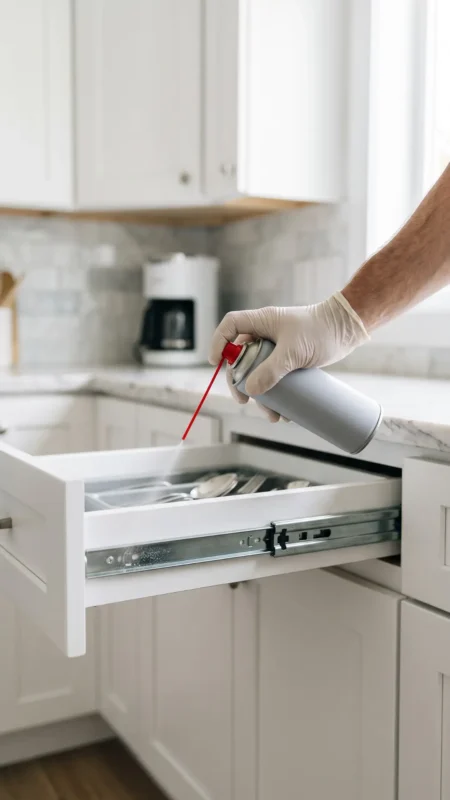
Corrosion inhibitor spray (e.g. Corrosion Block, Boeshield T-9): A waxy film-forming inhibitor applied to hinge pins, drawer runner bearings, and track rollers. Displaces moisture and leaves a protective film. Superior to WD-40, which evaporates quickly and leaves no lasting protection.
Silicone lubricant on moving parts: Apply silicone-based lubricant (not oil-based) to hinge pivot pins, drawer runner bearings, and track rollers at installation. Silicone does not attract dust and provides both lubrication and a moisture barrier. Reapply every 6–12 months.
Wax on static surfaces: A thin coat of carnauba wax on chrome or stainless steel handles and cabinet pulls creates a hydrophobic barrier that repels water and cleaning chemicals. Apply with a soft cloth; buff off. Reapply every 3 months in kitchen and bathroom environments.
Prevention Step 3 — Improve Ventilation in High-Risk Cabinets
Trapped humid air inside enclosed cabinets is a significant corrosion driver. In Malaysian kitchens and bathrooms, the inside of base cabinets — particularly those under sinks, beside dishwashers, and adjacent to hobs — can reach 95%+ relative humidity.
Under-sink cabinet ventilation: Install a small passive ventilation grille at the back or base panel of under-sink cabinets. This allows air circulation that reduces trapped humidity. Some Malaysian kitchen designers specify a small 60mm or 80mm computer fan (12V, USB-powered) on a timer inside under-sink cabinets where moisture is a persistent problem.
Silica gel desiccant packs: Place silica gel desiccant packs inside enclosed cabinets containing sensitive hardware or stored items. Replace or recharge (in an oven at 100°C for 2 hours) every 3–6 months. Effective for wardrobes, display cases, and small utility cabinets.
Gap between cabinet base and floor: Ensure cabinet plinths have ventilation slots or gaps to allow airflow beneath base cabinet units. Sealed plinths trap moisture at floor level — particularly in Malaysian tiled kitchens where mopping creates puddles that collect under cabinets.
Prevention Step 4 — Regular Maintenance Schedule
A simple maintenance routine extends hardware life significantly and catches early corrosion before it becomes structural.
Every 3 months — kitchen and bathroom hardware:
- Wipe all exposed handles, hinges, and drawer pulls with a dry microfibre cloth
- Apply carnauba wax or stainless steel polish to handle and hinge surfaces
- Check under-sink cabinet for signs of water intrusion or condensation
Every 6 months — all hardware:
- Open all hinges fully and inspect the hinge pin and barrel for surface rust
- Lubricate hinge pins with silicone lubricant
- Pull out all drawers and inspect runner bearings — apply silicone lubricant if movement feels stiff or gritty
- Check drawer runner mounting screws — rust at screw holes is an early indicator of moisture penetration
Every 12 months — full inspection:
- Remove a sample hinge from each wet-area cabinet and inspect the back face (the side against the cabinet panel) — rust appears here first
- Inspect all screws for rust staining around the screw head — this indicates moisture is entering through the fixing holes
- Check folding door tracks and sliding door tracks for rust in the track channel — this causes roller wear and noise
How to Treat Existing Rust on Cabinet Hardware
If early-stage surface rust is already present, it can be treated before it spreads.
Light surface rust (orange staining, no pitting):
- Remove hardware from cabinet
- Clean with a rust converter (phosphoric acid-based — converts rust to iron phosphate which is stable)
- Sand lightly with 400-grit wet/dry sandpaper
- Apply clear lacquer or touch-up paint
- Reinstall with silicone lubricant on all moving parts
Moderate rust with pitting:
- Assess whether the hardware is structurally compromised — a pitted hinge may not hold load safely
- If the hinge or runner body is significantly pitted, replace it — treated but structurally compromised hardware is a safety risk
- If pitting is superficial, treat as above and monitor closely
Severe rust (hardware seizing or structurally degraded):
- Replace the hardware. There is no cost-effective treatment for severely corroded furniture hardware. Replacement is always the right decision for seized drawer runners, collapsed hinge barrels, or structurally compromised brackets.
Where to Buy Rust-Resistant Cabinet Hardware in Malaysia
Acts ID Hardware stocks a full range of rust-resistant cabinet and furniture hardware for Malaysian conditions — including 304 and 316 stainless steel hinges, powder-coated aluminium drawer runners, stainless cabinet handles, and silicone lubricant for maintenance. We supply to homeowners, contractors, and ID firms across Malaysia from our warehouse in Ulu Tiram, Johor.
Browse our furniture hardware range or read our Industrial & Workshop Adhesives Guide for complementary maintenance products. WhatsApp our team at +6013-790 1266 for specific product recommendations. Free delivery above RM 300 (West Malaysia).
Frequently Asked Questions
What is the best rust-resistant hinge for a Malaysian bathroom cabinet?
For a bathroom cabinet in Malaysia, specify 304 stainless steel concealed hinges. For bathrooms with open showers or direct moisture exposure, upgrade to 316 (marine grade) stainless steel. Avoid chrome-plated or zinc alloy hinges in any bathroom application — the plating degrades rapidly with exposure to steam, cleaning chemicals, and high humidity.
How do I stop my kitchen drawer runners from rusting in Malaysia?
Apply silicone-based lubricant to the runner bearing surface every 6 months. Ensure the kitchen cabinet has adequate ventilation to prevent trapped moisture. If the current runners are mild steel or chrome-plated steel and showing rust, replace them with stainless steel or anodised aluminium runners — these will not rust in Malaysian kitchen conditions. Acts ID stocks both options.
Does WD-40 prevent rust on cabinet hardware?
WD-40 displaces moisture temporarily but does not provide lasting rust protection — it evaporates within days in Malaysian humidity, leaving no protective film. For furniture hardware rust prevention, use a film-forming corrosion inhibitor (such as Corrosion Block or Boeshield T-9) on static surfaces, and silicone-based lubricant on moving parts such as hinge pins and drawer runners.
Can I use bleach to clean cabinet hardware in Malaysia?
No. Bleach (sodium hypochlorite) is highly corrosive to most cabinet hardware finishes including chrome plating, zinc alloy, and even some grades of stainless steel with extended exposure. Use a mild neutral detergent and water for regular cabinet hardware cleaning. For stainless steel hardware, a dedicated stainless steel cleaner applied with a soft cloth along the grain is the correct maintenance approach.
How often should I lubricate cabinet hinges and drawer runners in Malaysia?
In air-conditioned rooms with normal usage, lubricate hinges and drawer runner bearings every 12 months. In non-air-conditioned kitchens, bathrooms, service yards, or any space with consistently high humidity, increase lubrication frequency to every 6 months. Use silicone-based lubricant — not oil-based products, which attract dust and degrade rubber or nylon components in the hardware.