Folding Door Systems Malaysia 2026 — Bi-Fold, Accordion & Sliding Folding Guide
Folding doors solve a specific problem that neither swing doors nor sliding doors can: how do you create a wide opening in a limited space, without sacrificing floor area to door swing or losing wall space to a sliding track? In Malaysian homes and offices, folding door systems are the standard solution for bathroom entrances in narrow corridors, kitchen pass-throughs, partition walls between living areas, and service yard access. But not all folding door systems are the same — bi-fold, accordion, and sliding-folding systems each have different hardware, different panel configurations, and different ideal applications. This guide covers all three, with clear guidance on hardware selection, panel sizing, and what to specify for Malaysian conditions in 2026.
What Is a Folding Door System?
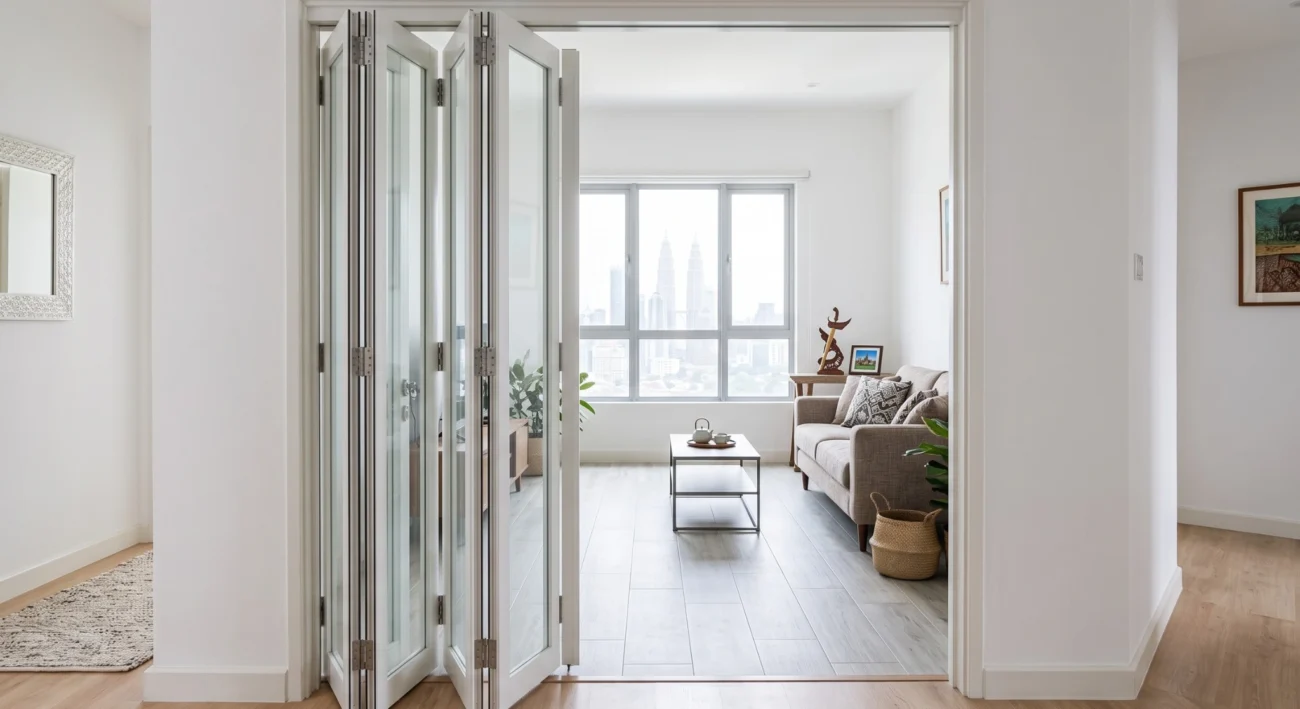
A folding door system is a door assembly where multiple panels — typically two to eight — are connected by hinges and run on a track, folding against each other accordion-style when opened. Unlike a single swing door that requires a full door-width clearance arc, or a sliding door that requires a full door-width wall beside the opening, a folding door system stacks its panels into a compact bundle at the side of the opening when fully open.
The result: a folding door system can create a full-width opening — sometimes 2–4 metres — that when open takes up only 20–30cm of wall space beside the opening. For Malaysian homes where every centimetre of corridor width and room width matters, this is a meaningful advantage.
A folding door system consists of:
- Door panels — typically MDF, timber, aluminium, PVC, or glass
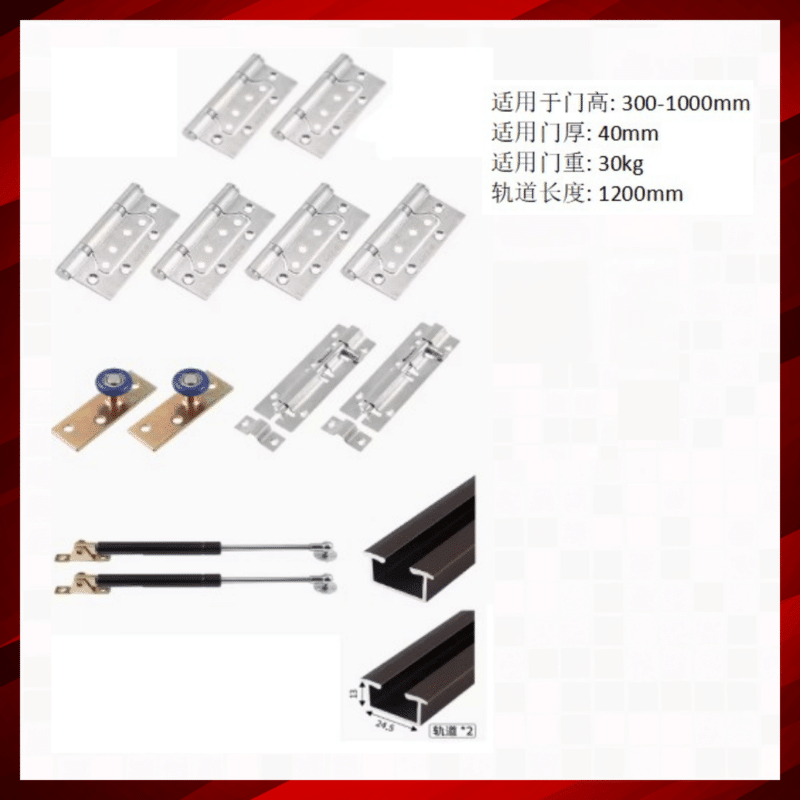
- Pivot hinges — connecting adjacent panels and allowing them to fold
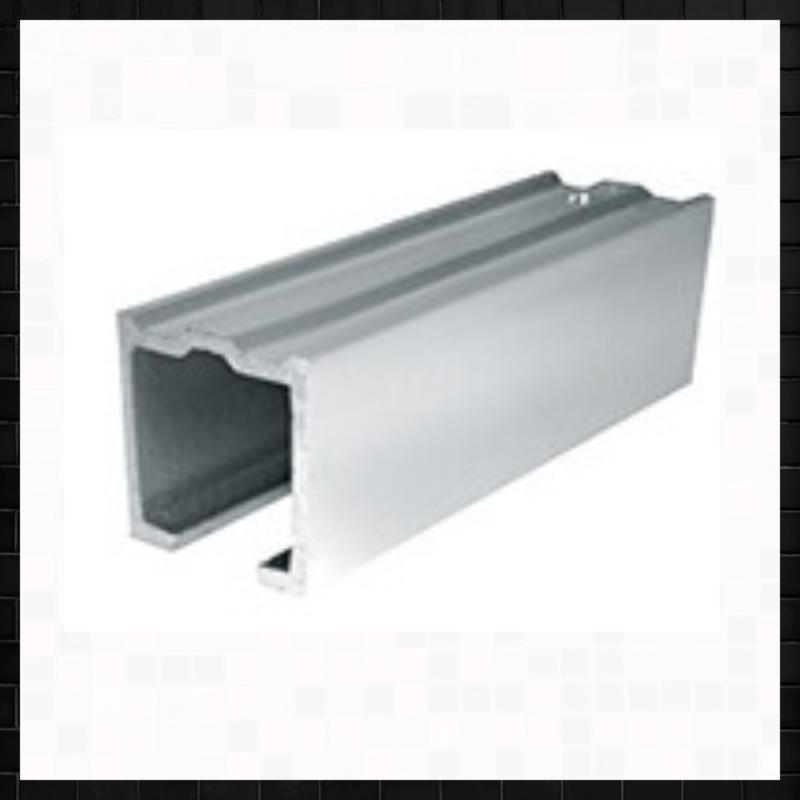
- Top track — the overhead rail the panels run on
- Bottom guide or bottom track — keeping the lower panel edge aligned
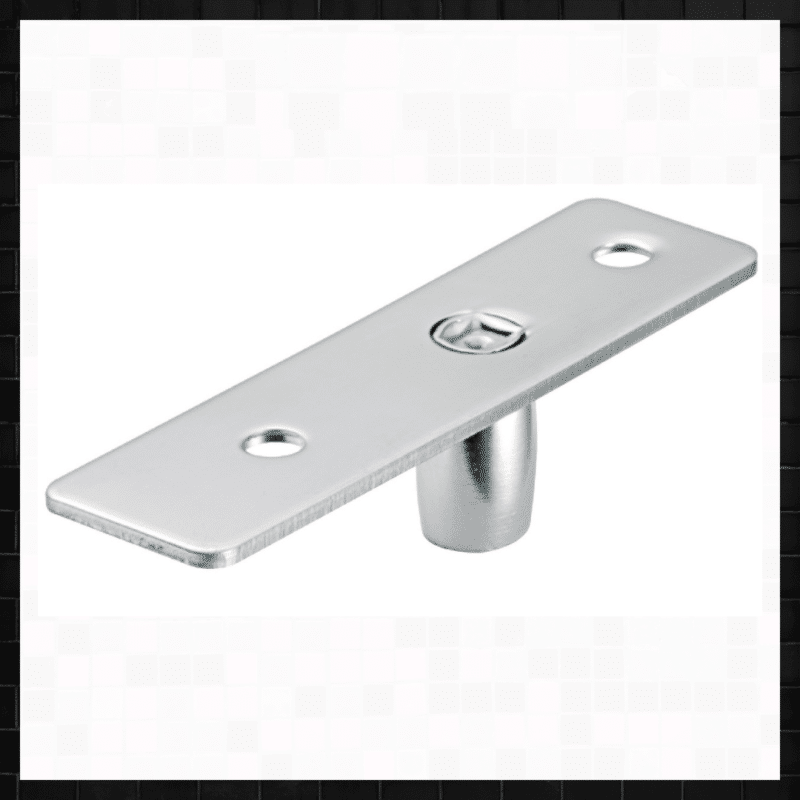
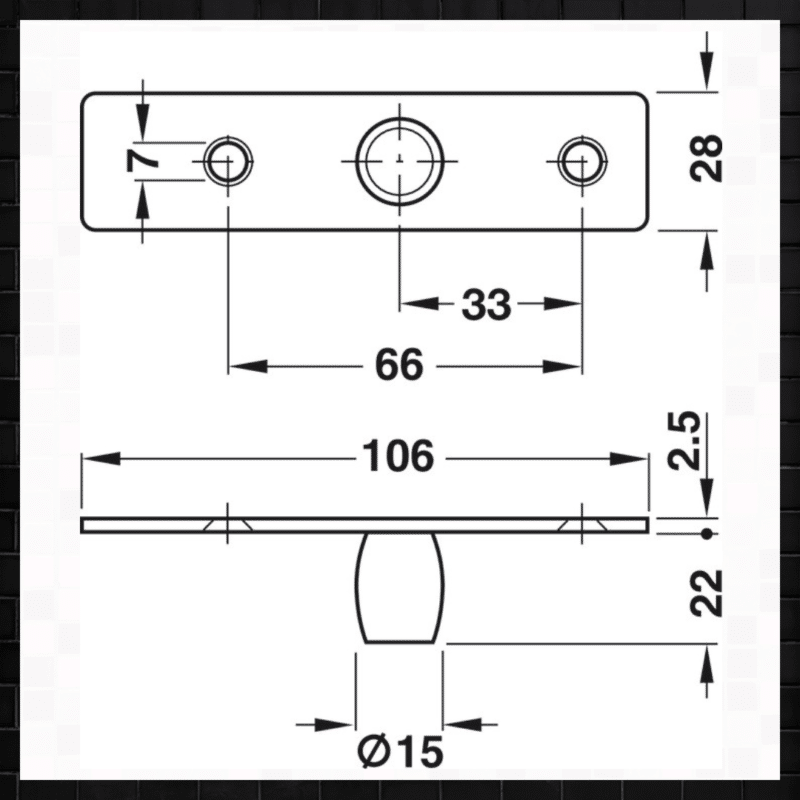
- Pivot bracket — the fixed pivot point at one end of the track
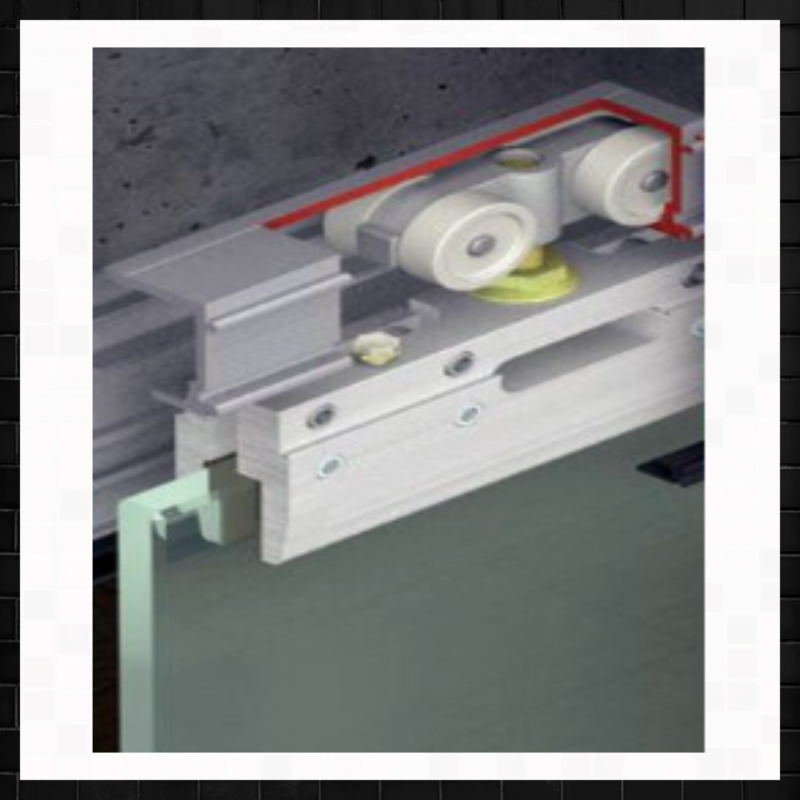
- Carrier/roller — the roller assembly that runs in the track, connecting the moving end of the panel set
Types of Folding Door Systems in Malaysia
1. Bi-Fold Door System (2-Panel)
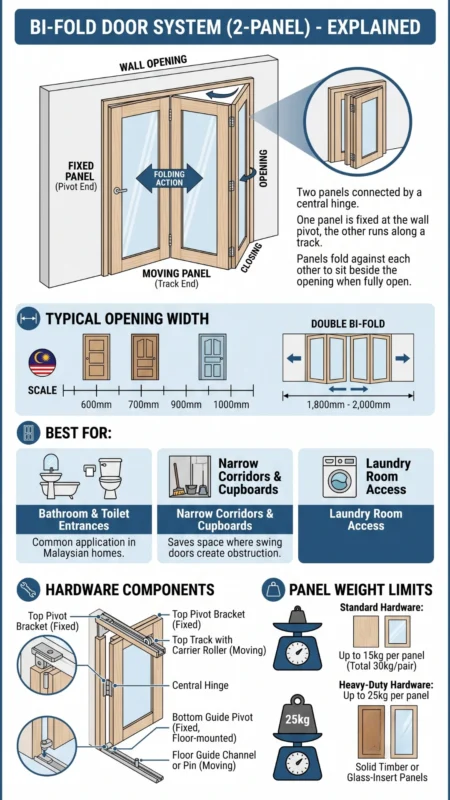
A bi-fold door is the simplest folding configuration — two panels connected by a central hinge, with one panel fixed at the pivot end and one panel running on the track. When opened, the two panels fold against each other at the central hinge, creating a folded pair that sits beside the opening.
Opening width: A bi-fold system typically covers openings from 600mm to 1,000mm. For wider openings, a double bi-fold (two bi-fold sets meeting in the centre) extends this to 1,800–2,000mm.
Best for:
- Bathroom and toilet entrances (the most common bi-fold application in Malaysian homes)
- Narrow corridor cupboards and utility rooms
- Laundry room access
- Any opening between 600mm–1,000mm where a swing door creates obstruction
Hardware components:
- Top pivot bracket (fixed at the wall end)
- Top track with carrier roller (for the moving panel end)
- Central hinge (connecting the two panels)
- Bottom guide pivot (floor-mounted, guides the bottom of the fixed panel)
- Floor guide channel or single bottom guide pin (for the moving panel bottom)
Panel weight limits: Standard bi-fold hardware is rated for panels up to 15kg per panel (total 30kg for the pair). Heavy-duty bi-fold hardware handles panels up to 25kg per panel — required for solid timber or glass-insert panels.
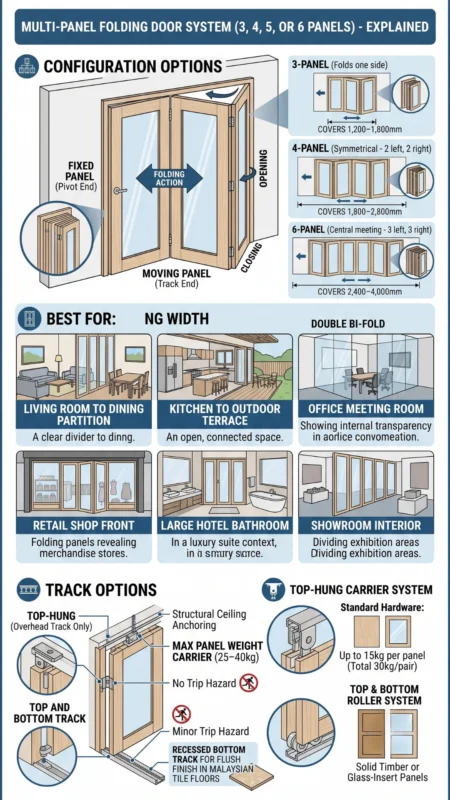
2. Multi-Panel Folding Door System (3, 4, 5, or 6 Panels)
A multi-panel folding system extends the bi-fold principle to three or more panels, allowing it to cover much wider openings while still folding into a compact stack beside the opening.
Configuration options:
- 3-panel: Folds to one side only. Covers openings 1,200–1,800mm.
- 4-panel: Folds symmetrically (2 panels each side) or to one side (all 4 panels). Covers 1,800–2,800mm.
- 6-panel: Typically 3 panels each side meeting in the centre. Covers 2,400–4,000mm.
Best for:
- Living room to dining room partitions
- Kitchen to outdoor terrace connections (open-plan living)
- Office meeting room partitions
- Retail shop fronts and restaurant entrance divisions
- Large bathroom entrances in hotels and showrooms
Track options:
- Top-hung (overhead track only): No bottom track. Clean floor finish, no trip hazard. Requires panels to be well-balanced and the top track to be securely anchored to a structural ceiling or beam. Maximum panel weight per carrier: 25–40kg depending on hardware grade.
- Top and bottom track: Bottom track guides each panel. More stable for heavier or taller panels. The bottom track is a minor trip hazard on hard floors — specify a recessed bottom track in Malaysian tile floors for a flush finish.
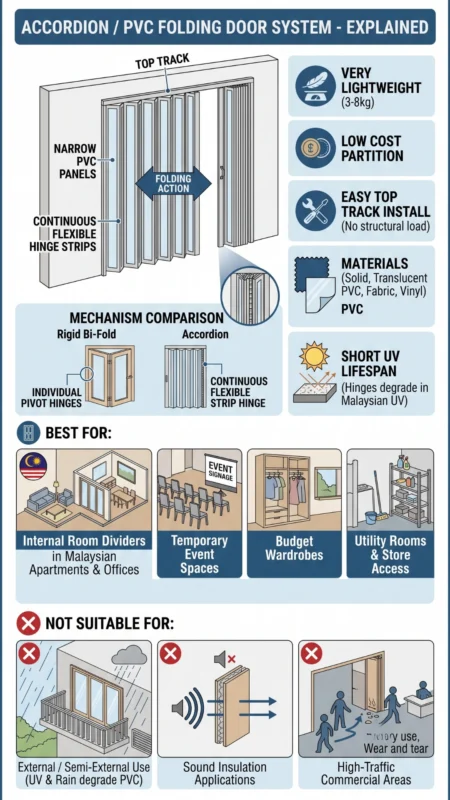
3. Accordion / PVC Folding Door System
An accordion door (also called a concertina door or PVC folding partition) is a lightweight flexible folding system using multiple narrow PVC or fabric panels connected by continuous hinge strips. Unlike bi-fold or multi-panel systems that use rigid panels with individual pivot hinges, an accordion door folds on continuous flexible hinges along its full height.
Characteristics:
- Very lightweight — entire system typically 3–8kg
- Low cost — the most affordable folding partition option in Malaysia
- Easy installation — top track only, no structural load requirement
- Panels available in PVC (solid, translucent, or patterned), fabric, or vinyl
- Not suitable for security or sound insulation applications
- Lifespan shorter than rigid panel systems — PVC hinges degrade in Malaysia’s UV-exposed areas
Best for:
- Internal room dividers in Malaysian apartments and offices
- Temporary partitions in function rooms and event spaces
- Wardrobe doors in budget renovation projects
- Utility room and store room access where security is not required
Not suitable for:
- External or semi-external applications (UV and rain degrade PVC quickly)
- Any application requiring sound insulation
- High-traffic commercial areas (hinge wear is significant under heavy use)
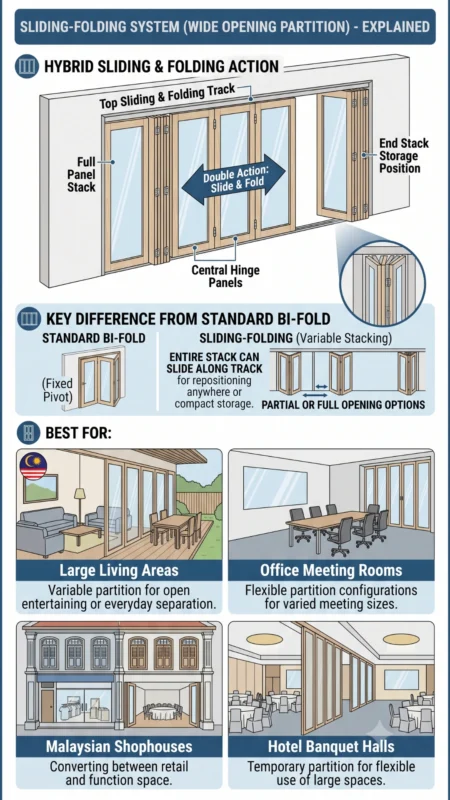
4. Sliding-Folding System (Wide Opening Partition)
A sliding-folding system is a hybrid — the panels run on an overhead sliding track and also fold against each other. This allows the full panel stack to slide along the track to a storage position beside the opening, rather than being fixed at one end.
The key difference from standard bi-fold: In a standard bi-fold, the folded panel stack is fixed beside the opening. In a sliding-folding system, the entire stack can slide along the track — allowing it to be positioned anywhere along the opening or tucked fully to one side. This means the opening can be partially open (one section of panels slid aside) or fully open (all panels stacked at one end).
Best for:
- Large living areas where the partition needs to be variable — fully open for entertaining, partially open for everyday use
- Office meeting rooms requiring flexible partition configurations
- Malaysian shophouses converting ground floor between retail and event space
- Hotel banquet halls and function room partitions
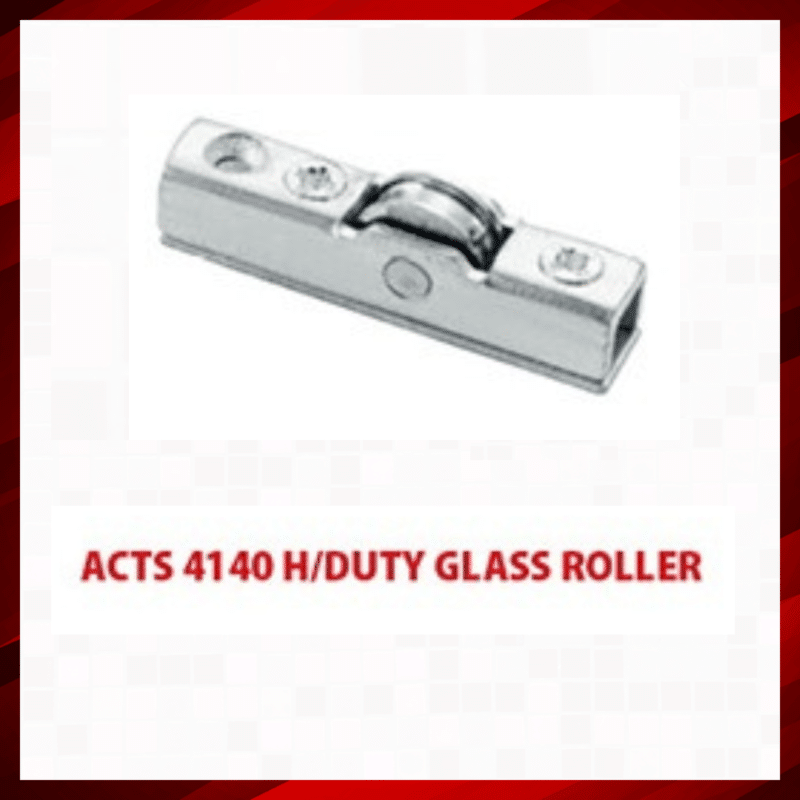
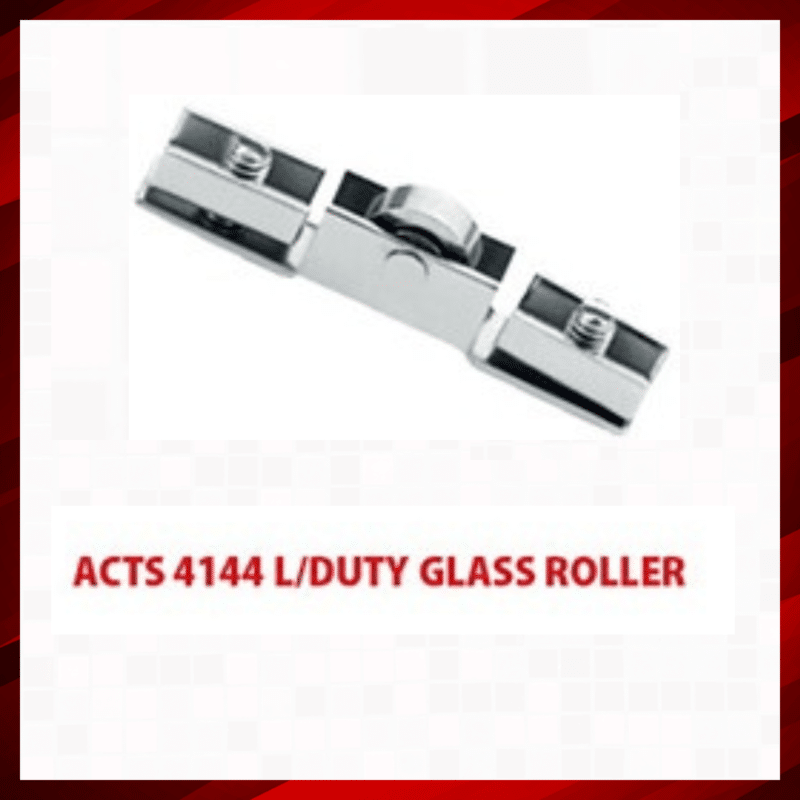
ACTS 4140 / 4144 GLASS ROLLER
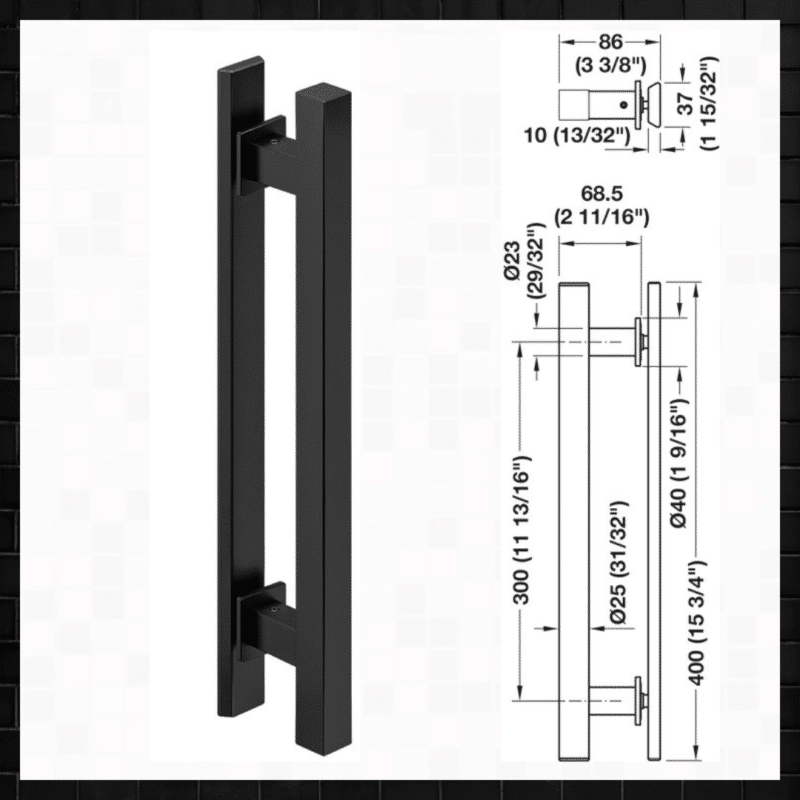
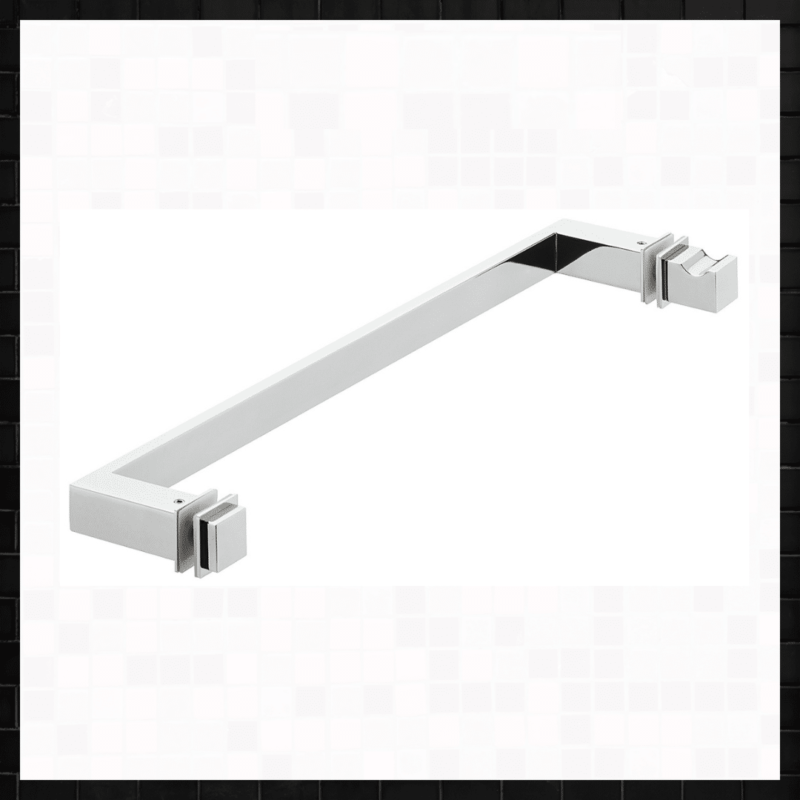
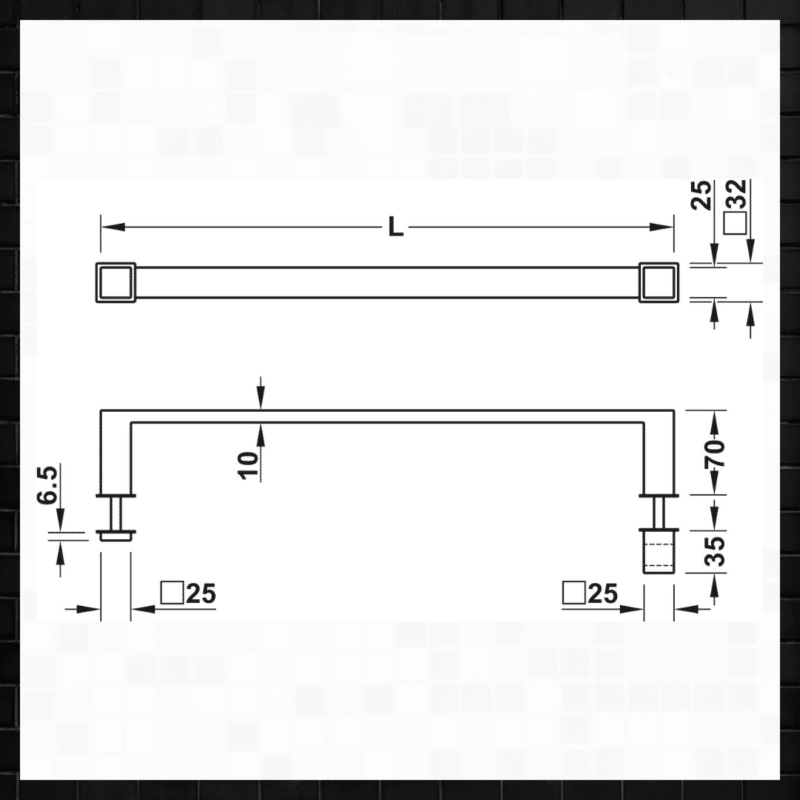
RM2.4 – RM3.3Price range: RM2.4 through RM3.3HAFELE Flush pull handle for sliding doors, Aluminium, one-sided, square
RM718.0 – RM786.0Price range: RM718.0 through RM786.0
Folding Door Hardware — What Determines Quality
Track Material and Load Rating
The overhead track bears all the panel weight in a top-hung folding system. Track quality directly affects how smoothly the panels operate and how long the system lasts.
- Aluminium track: Standard for residential folding door systems in Malaysia. Lightweight, rust-proof, available in multiple profiles. Load rating typically 15–40kg per carrier.
- Steel track: Used in heavier commercial systems. Higher load rating (up to 80kg per carrier). Requires a protective coating in Malaysia’s humid climate.
- Stainless steel track: Specified for external or semi-external applications — covered car porch folding doors, restaurant alfresco partitions. Rust-proof in all Malaysian weather conditions.
Hinge Quality and Alignment
The inter-panel hinges — the hinges connecting adjacent panels — are the highest-wear component in any folding door system. In a 4-panel system used twice daily, the hinges complete over 700 cycles per year. Cheap stamped hinges develop play within 12–18 months, causing panel misalignment and track wear.
Specify:
- Steel or stainless steel hinge body (not zinc alloy / pot metal)
- Adjustable hinge for vertical alignment correction after installation
- Nylon or PTFE bushing on the pivot pin for smooth, low-friction operation
Roller / Carrier Assembly
The roller carrier is the component that runs inside the track. Roller quality determines how smoothly the panels glide and how much noise the system produces in operation.
- Nylon wheel rollers: Quiet, adequate for panels up to 20kg. Standard for Malaysian residential bi-fold systems.
- Ball-bearing roller carriers: Recommended for heavier panels (20–60kg) and high-use commercial applications. Smooth, quiet, long service life.
- Anti-jump design: Ensure the carrier has a top flange or anti-jump lip that prevents the roller from jumping out of the track when the panel is pulled sharply. This is a common failure mode in lower-quality folding door hardware.
How to Choose the Right Folding Door System in Malaysia
Opening width under 1,000mm → Bi-fold (2 panel) Most bathroom and utility room entrances in Malaysian homes fall in this range. Bi-fold is the simplest, most cost-effective solution.
Opening width 1,000–2,800mm → Multi-panel (3 or 4 panel) Living room partitions, kitchen passthrough openings, and wider bathroom entrances. Choose top-hung for clean floor finish; add bottom track for heavier panels or taller openings above 2.4m.
Opening width above 2,800mm → 6-panel or sliding-folding system Large living-to-terrace openings, office partitions, shopfront divisions. Sliding-folding gives the most flexibility for partial opening configurations.
Budget partition, non-security → Accordion / PVC Internal room dividers, wardrobe door, store room. Do not specify PVC accordion for external or semi-external areas.
Outdoor or semi-outdoor application → Stainless steel track, aluminium or glass panels Car porch folding enclosures, alfresco dining partitions, balcony screens. Specify IP-rated hardware with stainless or powder-coated aluminium only.
Where to Buy Folding Door Hardware in Malaysia
Acts ID Hardware stocks a complete range of folding door system hardware — bi-fold pivot sets, multi-panel folding track and carrier systems, sliding-folding hardware, and aluminium profiles for custom configurations. We supply to contractors, ID firms, and homeowners across Malaysia from our warehouse in Ulu Tiram, Johor.
Browse the folding door hardware range or the sliding door system range on our site, or WhatsApp our team at +6013-790 1266 with your opening width, panel material, and application. Free delivery on orders above RM 300 (West Malaysia).
Frequently Asked Questions
What is the difference between a bi-fold door and a sliding door?
A bi-fold door folds its panels against each other and stacks them beside the opening. A sliding door slides panels behind each other on a parallel track. Bi-fold systems create a wider usable opening from a given wall width — a bi-fold opens nearly the full opening width. A sliding door always leaves at least one panel covering part of the opening. For maximum clear width in a narrow space, bi-fold is the better choice.
Can folding door hardware be used for glass panels in Malaysia?
Yes. Heavy-duty bi-fold and multi-panel folding systems are designed to carry glass panels (typically 6–10mm tempered glass). Specify hardware rated for the full glass panel weight — a 900×2100mm panel of 8mm tempered glass weighs approximately 38kg. Top-hung track with ball-bearing carriers and a recessed bottom guide channel is the standard glass folding door specification in Malaysian residential and commercial projects.
How do I maintain folding door hardware in Malaysia’s humidity?
Lubricate track rollers and pivot hinge pins with a silicone-based lubricant every 6–12 months — do not use WD-40 as it attracts dust and degrades rubber and nylon components. Check hinge alignment annually — misalignment causes uneven track wear. For external applications, wipe down stainless steel tracks and hinges with a mild stainless steel cleaner every 3 months to remove surface oxidation from Malaysia’s salt-laden coastal air.
What panel weight can a standard bi-fold system handle?
Standard residential bi-fold hardware (the most common grade in Malaysia) is rated for panels up to 15kg per panel — suitable for hollow-core, PVC-faced MDF, or lightweight timber panels. Heavy-duty bi-fold hardware handles panels up to 25–30kg — required for solid timber, louvred timber, or glass-insert panels. Always check the panel weight against the hardware load rating before purchasing.
Can I retrofit a folding door system to an existing doorway in Malaysia?
Yes. Bi-fold and accordion systems can be retrofitted to existing door openings with minimal structural work. The overhead track is fixed to the door head frame or the ceiling above the opening. The only critical check is that the door head frame or ceiling structure can carry the panel weight — for panels above 20kg total, confirm the fixing point with your contractor before installation.