Glass Door Hardware Malaysia 2026 — Hinges, Handles, Locks & Patch Fittings Guide
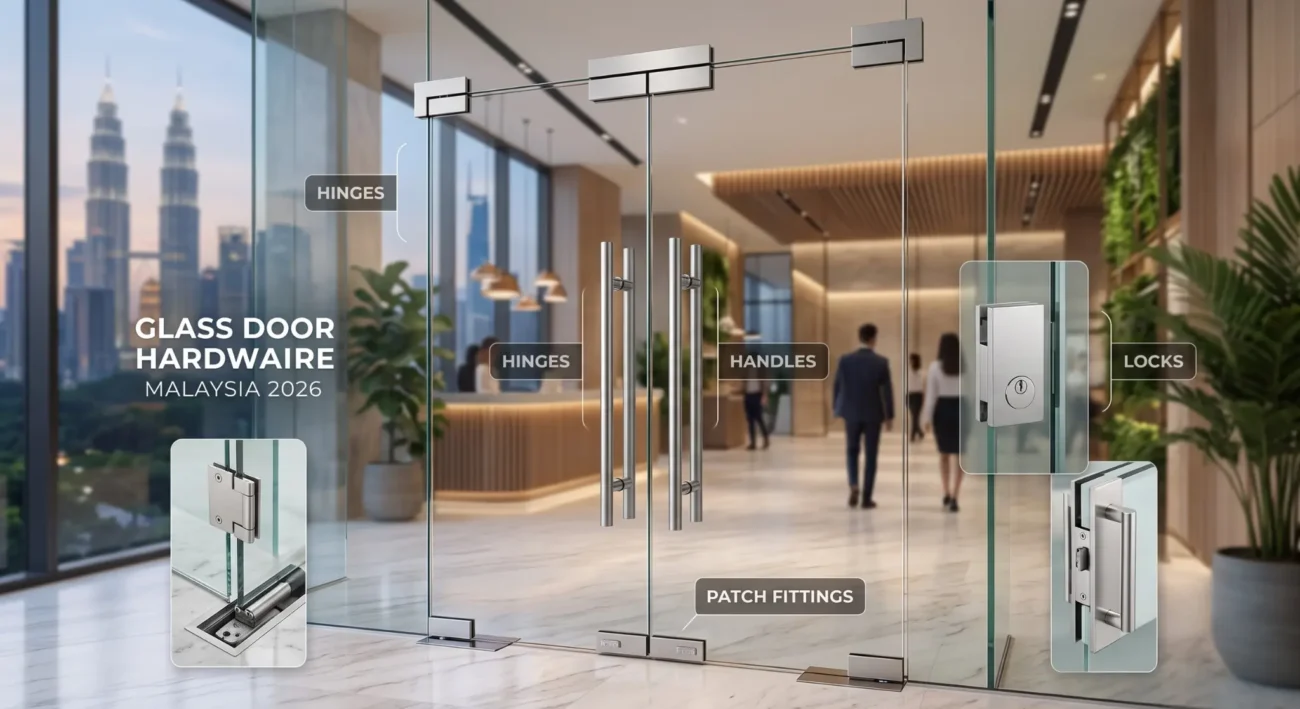
Glass doors are everywhere in modern Malaysian commercial and residential interiors — office entrances, retail shopfronts, bathroom shower screens, kitchen pass-throughs, display cases, and interior partition doors. But glass door hardware is a completely different category from standard timber door hardware. You cannot drill through glass the same way you drill through timber. You cannot use a standard hinge mortised into a glass door edge. Every fitting — hinge, handle, lock, and floor spring — must be designed specifically for frameless or semi-frameless glass, gripping the glass panel through clamping, patch fitting, or bonding rather than through conventional screw-into-material fixing. This guide covers every glass door hardware type available in Malaysia in 2026, with clear guidance on what to specify for each application.
Glass Door Types in Malaysian Properties
Before selecting hardware, identify your glass door type — the glass thickness, frame configuration, and application determine which hardware is compatible.
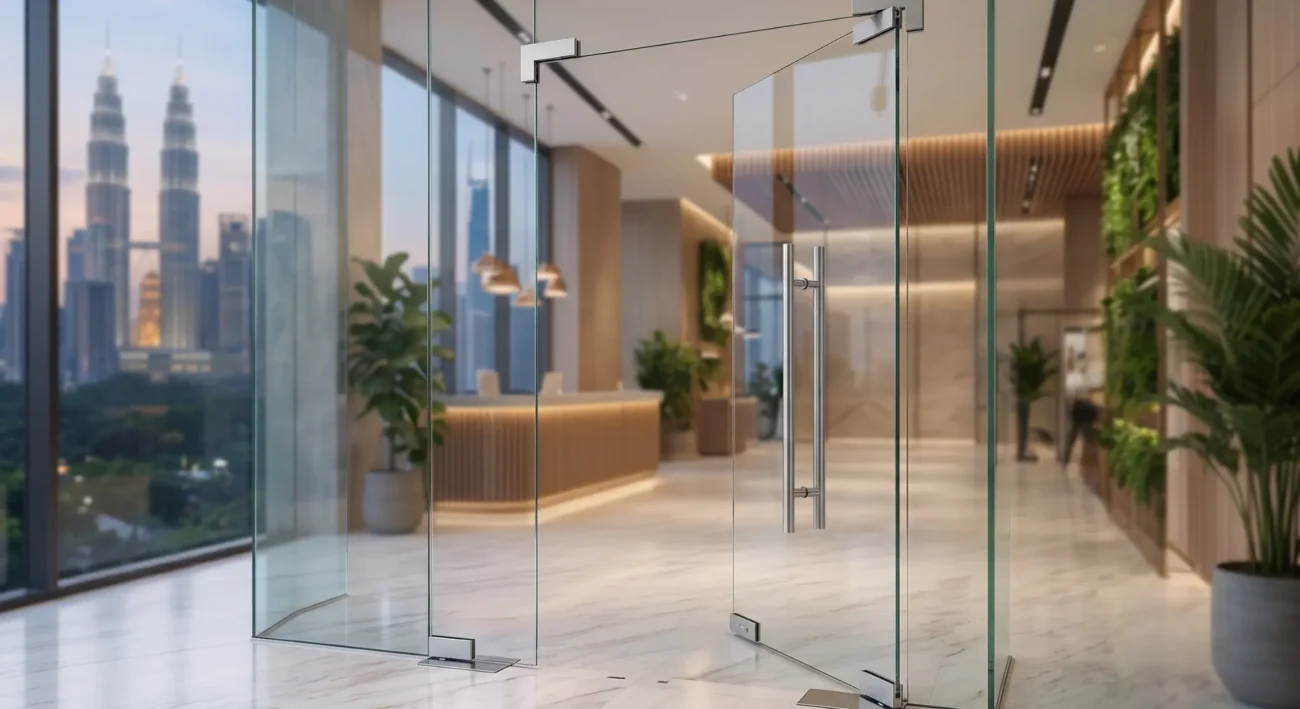
Frameless glass door: A single tempered glass panel with no surrounding frame. All hardware — hinges, handles, locks — clamps directly to the glass panel. Common in Malaysian office entrances, retail shopfronts, and premium bathroom shower screens. Typical glass thickness: 10mm, 12mm, or 15mm tempered glass.
Semi-frameless glass door: Glass panel within a partial frame — typically a top rail and two vertical stiles, but no bottom rail. Hardware is fixed to the frame members where possible, with patch fittings on the glass where not. Common in Malaysian retail displays and partition systems.
Framed glass door: Glass panel fully enclosed in an aluminium or timber frame. Standard hardware (hinges, locks, handles) fixes to the frame, not the glass. The glass is simply an infill panel. This is not covered in this guide — framed glass door hardware follows standard door hardware specifications.
Shower screen (wet area): Frameless or semi-frameless glass panels in bathroom shower enclosures. Hardware must be IP65 rated minimum, and all components must be brass or 316 stainless steel to resist long-term wet area exposure. Common glass thickness: 6mm, 8mm, or 10mm tempered.
Glass Door Hinges
Patch Fittings (Frameless Glass Door Hinges)
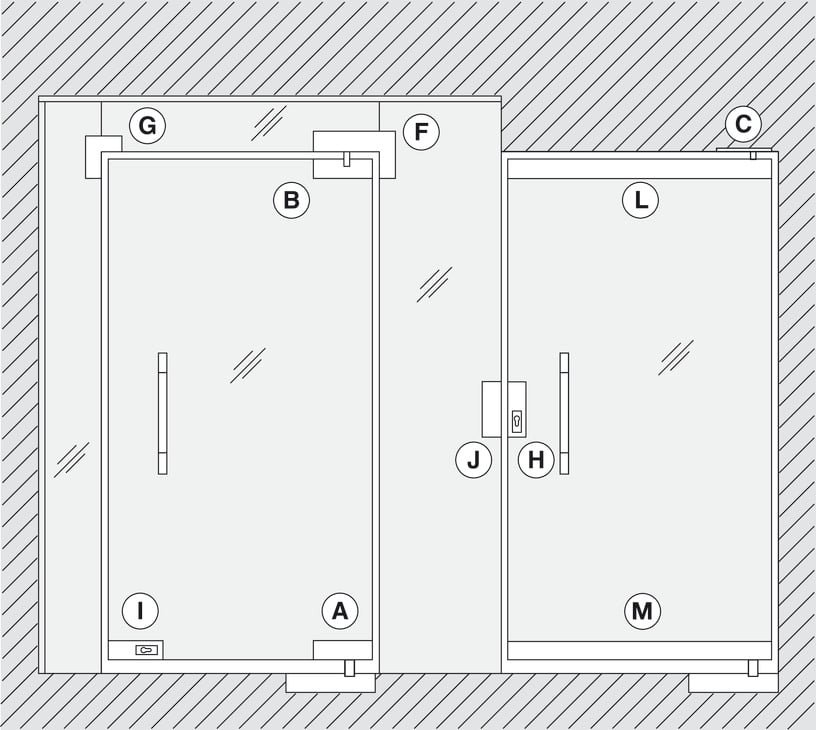
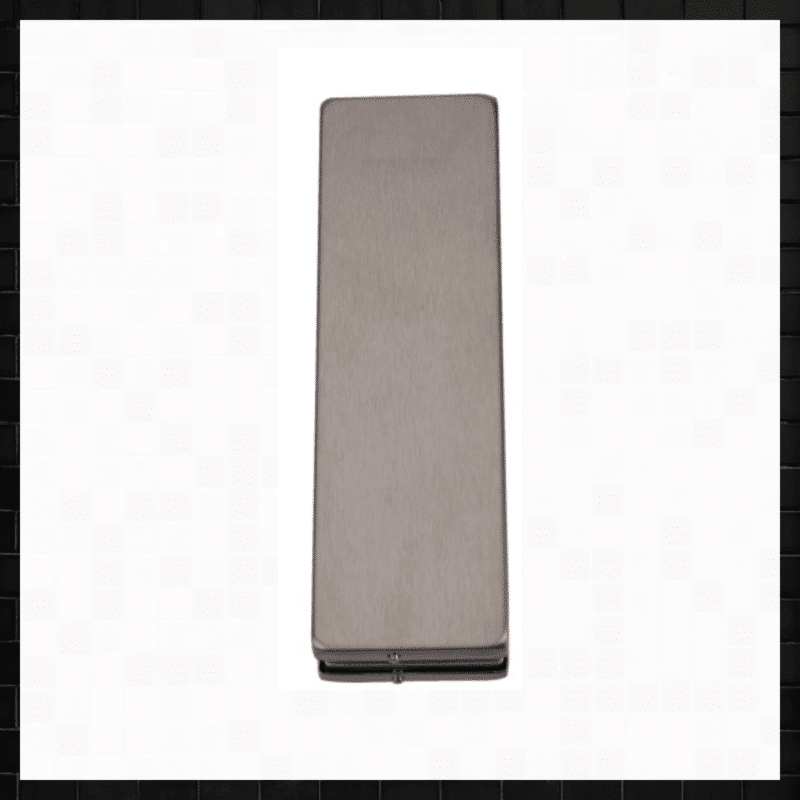
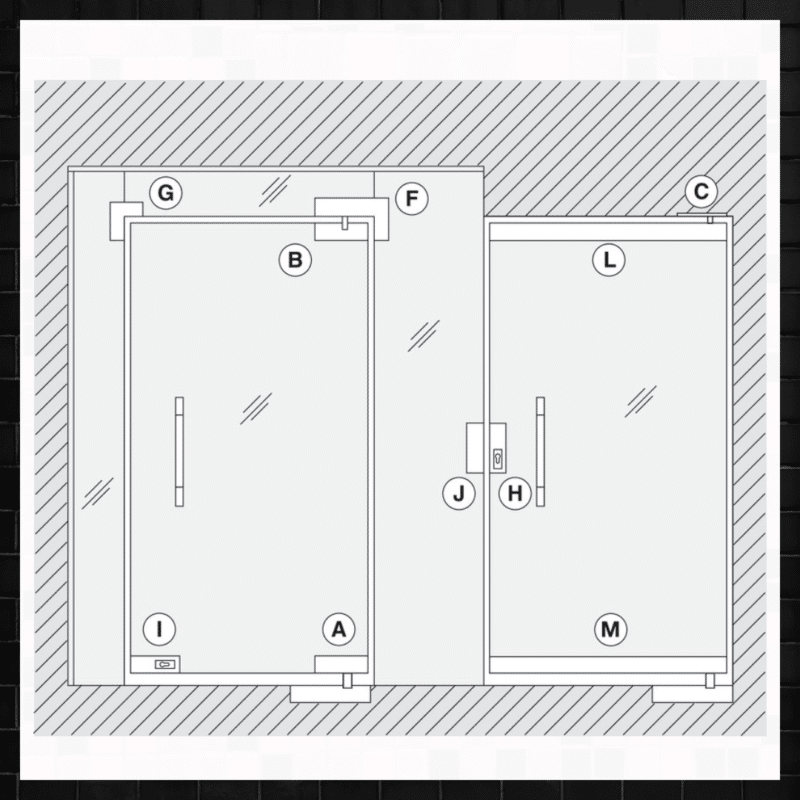
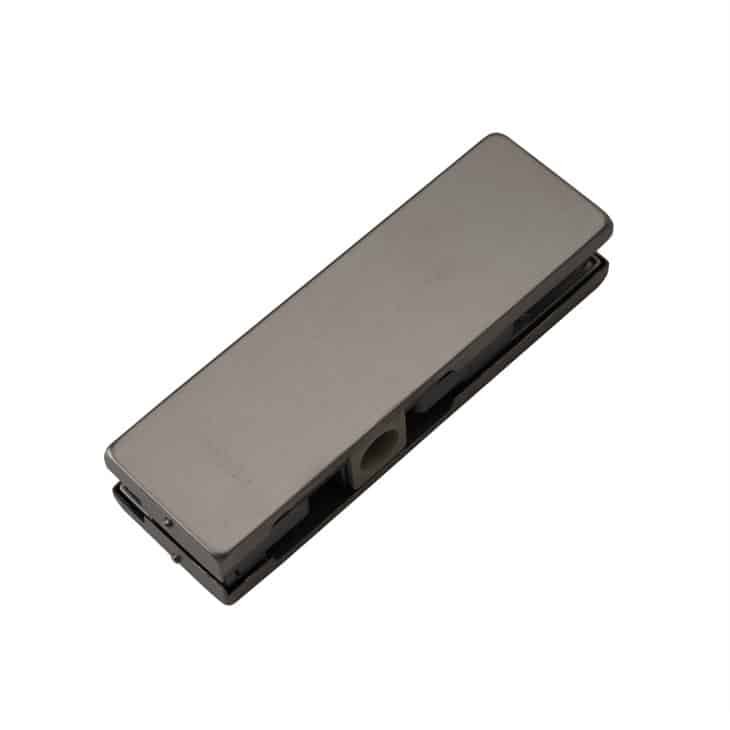
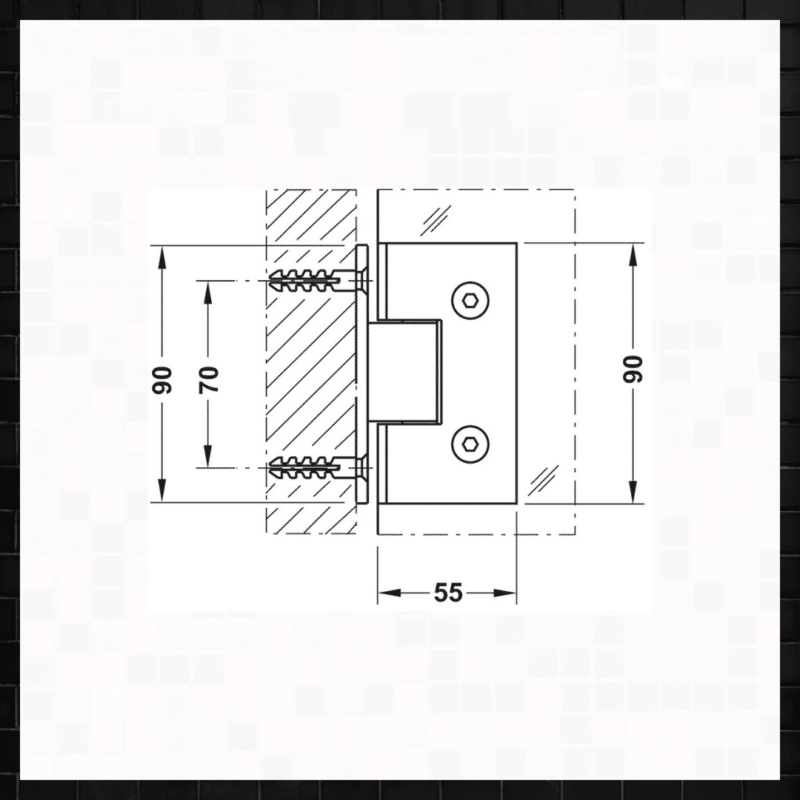
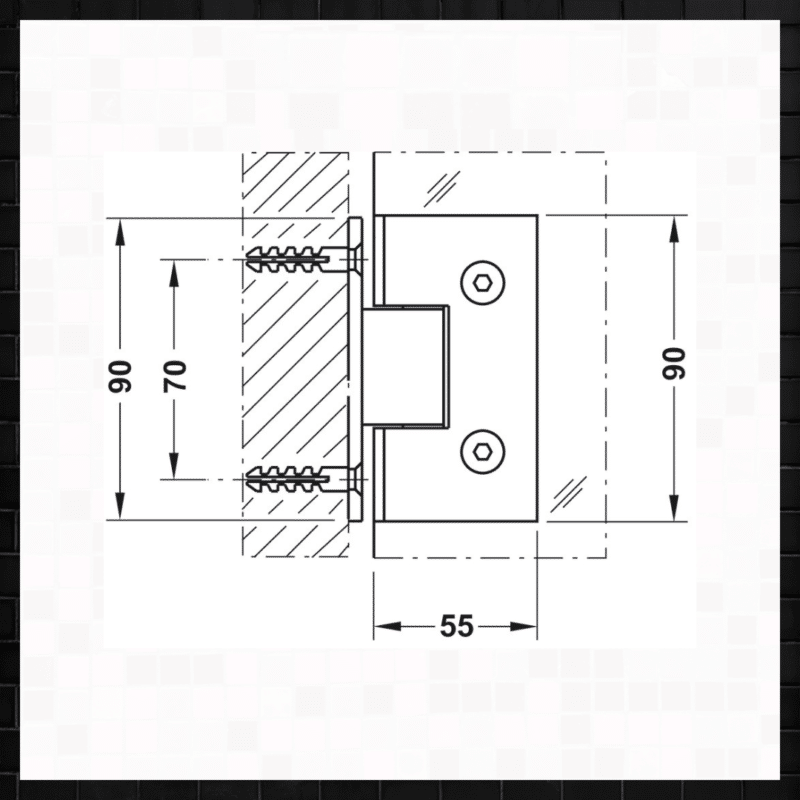
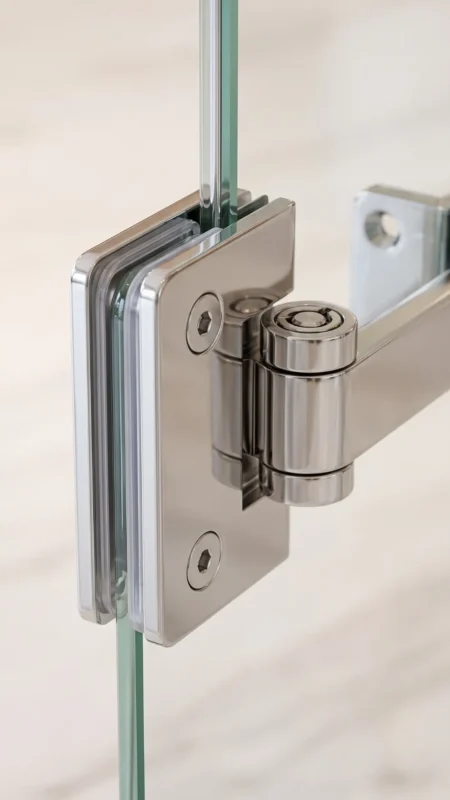
Patch fittings are the standard hinge hardware for frameless glass doors in Malaysia. A patch fitting consists of two clamping plates that sandwich the glass panel at the hinge point, held together by bolts through pre-drilled holes in the glass. The hinge pivot is incorporated into the patch body.
Installation requirement: Patch fittings require holes drilled through the glass by a specialist glass fabricator. The holes must be drilled before the glass is tempered — it is not possible to drill standard tempered glass on site without shattering it. Specify hole positions to your glass supplier when ordering the panel.
Standard patch fitting types:
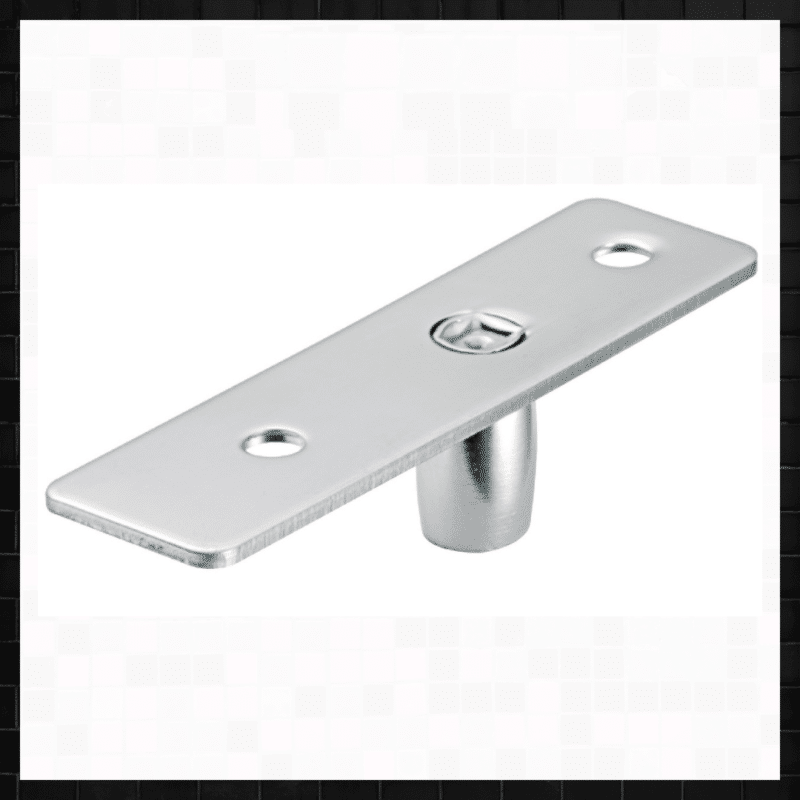
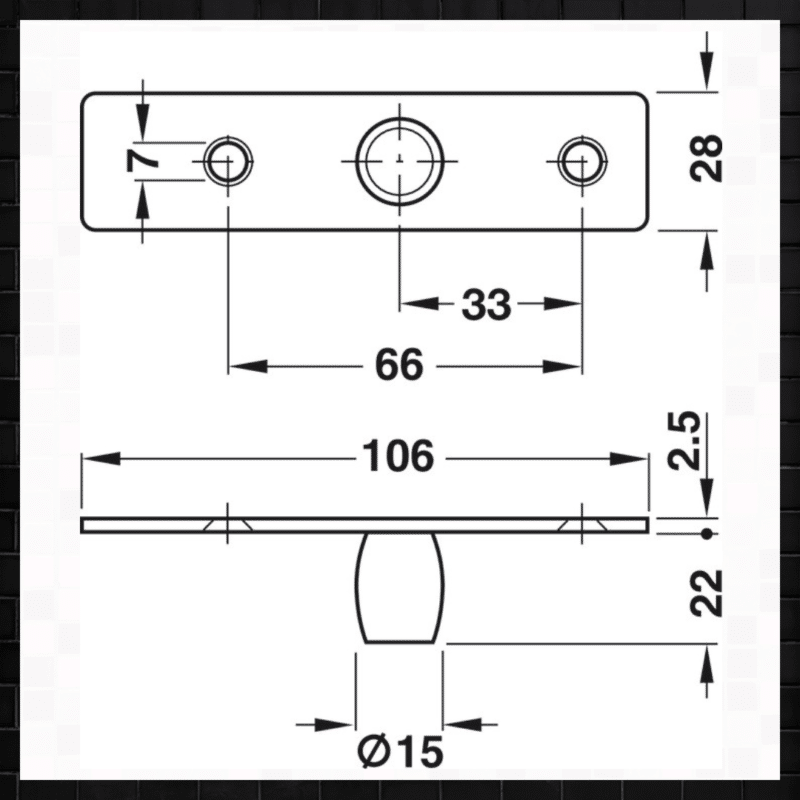
- Floor spring patch (pivot hinge at floor): The door pivots on a floor-mounted spring mechanism at the bottom and a top pivot at the door head. Used for heavy, full-height glass doors in Malaysian office and retail entrances.
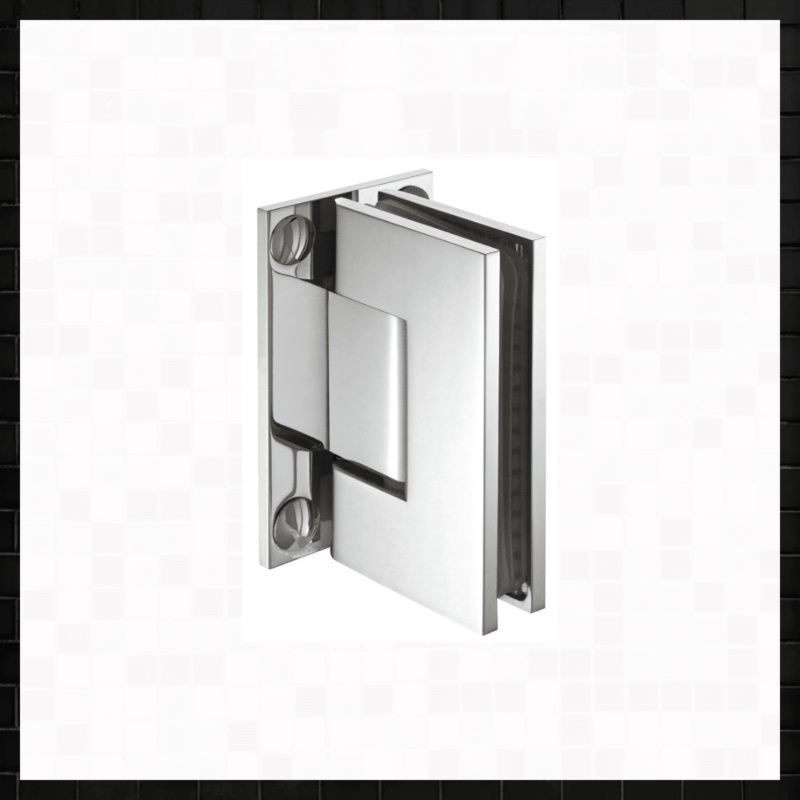
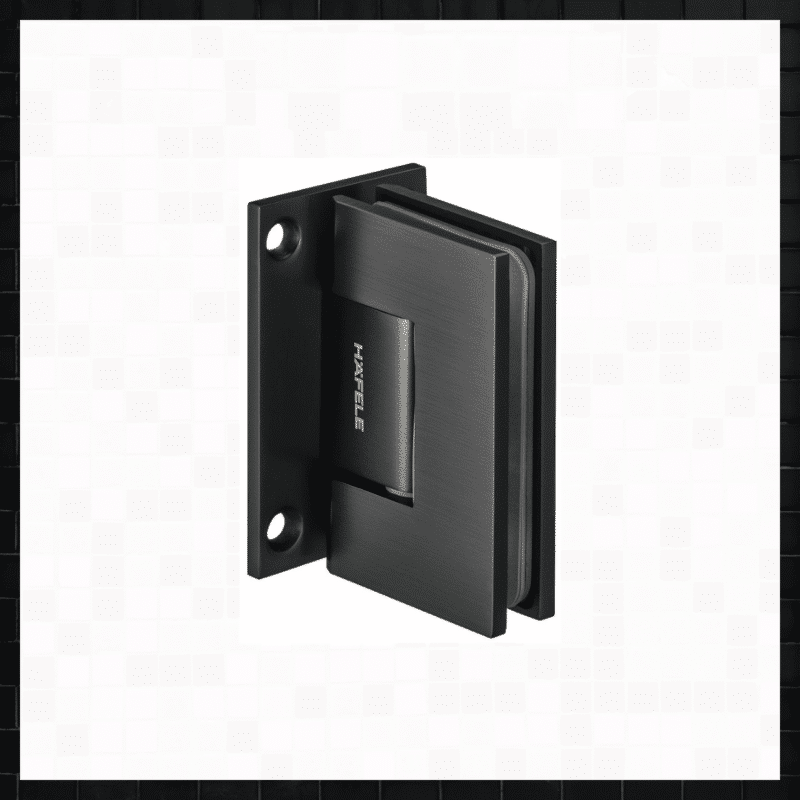
- Wall-fixed patch hinge (side-hinged): The hinge body is fixed to the wall or a structural post, and a patch fitting on the glass door panel connects to it. The door opens like a standard hinged door. Used for glass bathroom doors, interior glass partitions, and display case doors.
- Glass-to-glass hinge: A hinge that connects two glass panels directly — one fixed panel and one opening panel. Common in frameless shower enclosures and glass partition systems in Malaysian offices.
Load ratings: Specify patch fittings rated for the actual glass panel weight. A 900×2100mm panel of 12mm tempered glass weighs approximately 57kg. Use a minimum of two hinges per door, and three for panels above 50kg.
Finish options: Brushed stainless steel and polished stainless steel are the standard finishes for glass door patch fittings in Malaysia — both are rust-resistant for bathroom and coastal applications. Matte black is increasingly specified in modern Malaysian interiors for contrast against clear glass.
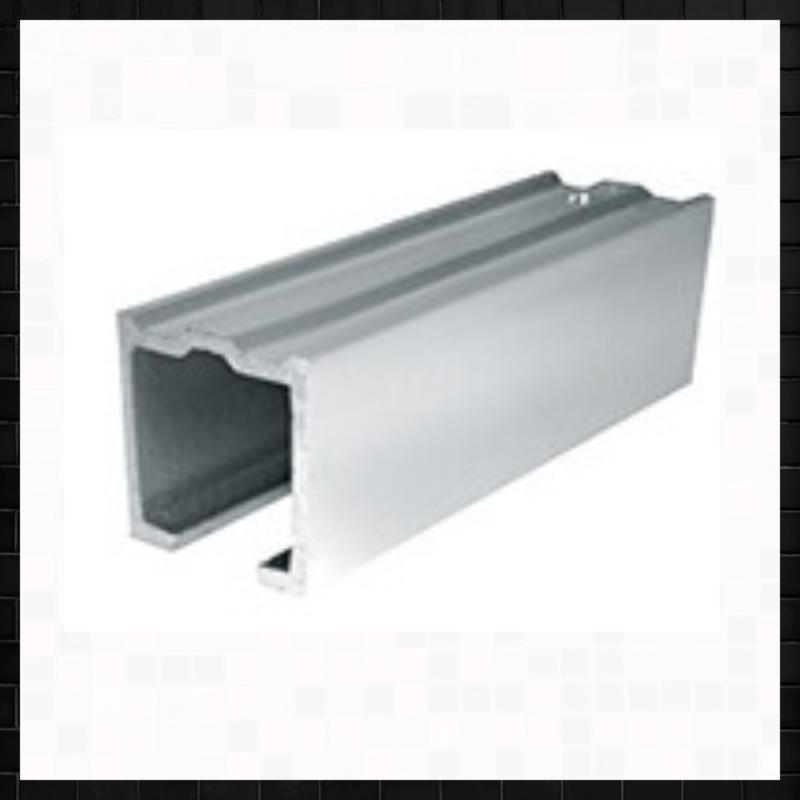
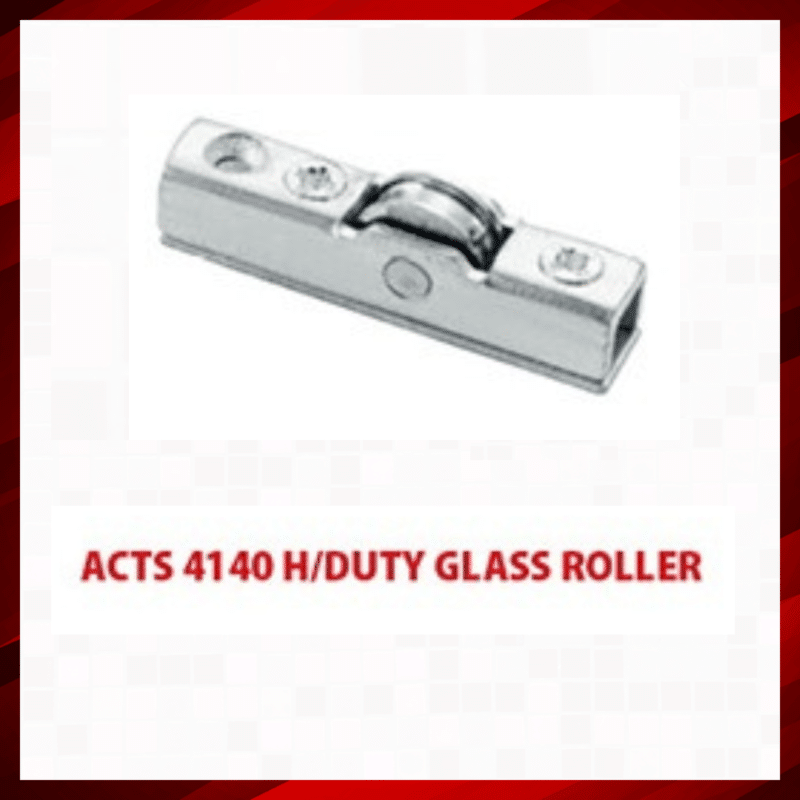
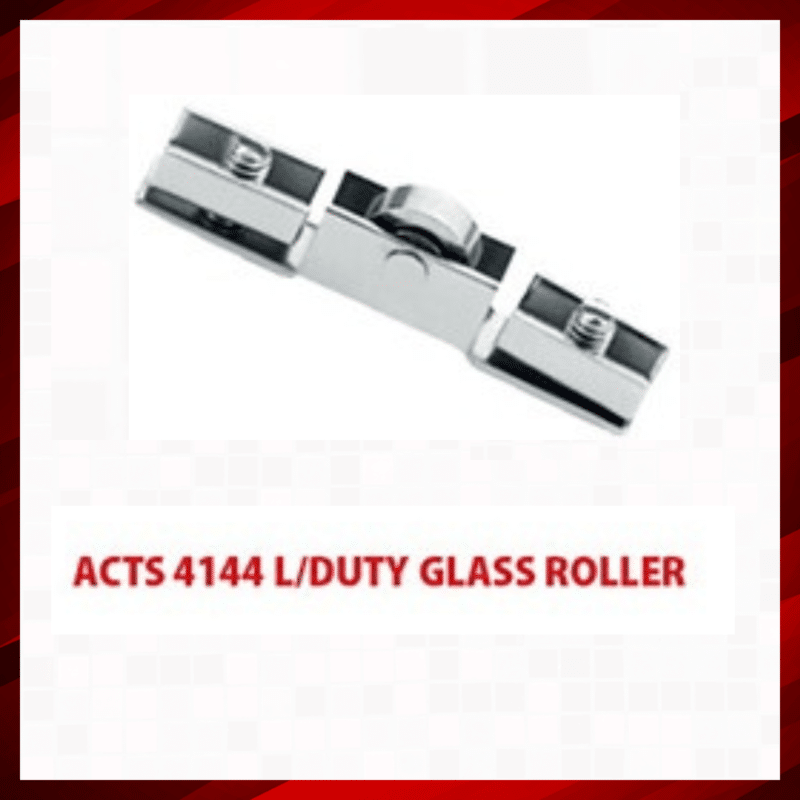
ACTS 4140 / 4144 GLASS ROLLER
RM2.4 – RM3.3Price range: RM2.4 through RM3.3HAFELE Flush pull handle for sliding doors, Aluminium, one-sided, square
RM718.0 – RM786.0Price range: RM718.0 through RM786.0
Pivot Hinges for Glass Doors
A pivot hinge is a top-and-bottom pivot system where the door rotates on a central vertical axis (which may be at the door edge or offset into the door panel, depending on the design). Unlike a side-hung hinge, a pivot hinge distributes the door weight through the floor and ceiling rather than through the side jamb.
Advantages for Malaysian properties:
- Handles very heavy glass panels (up to 200kg for heavy-duty pivot sets)
- Creates a wide, unobstructed opening — no hinge protrusion at the door edge
- Smooth, controlled operation with a built-in hydraulic closer in most floor pivot models
- Architectural appearance — single continuous glass panel with minimal visible hardware
Common applications in Malaysia:
Corporate office main entrances, hotel lobby doors, premium residential main doors, and large retail shopfront glass doors.
Floor spring closer:
Most full-height glass doors in Malaysian commercial properties use a floor spring — a hydraulic door closer recessed into the floor below the door pivot point. The floor spring controls the opening speed and provides automatic closing. Specify the floor spring for the actual door weight and the required closing speed.
Glass Door Handles
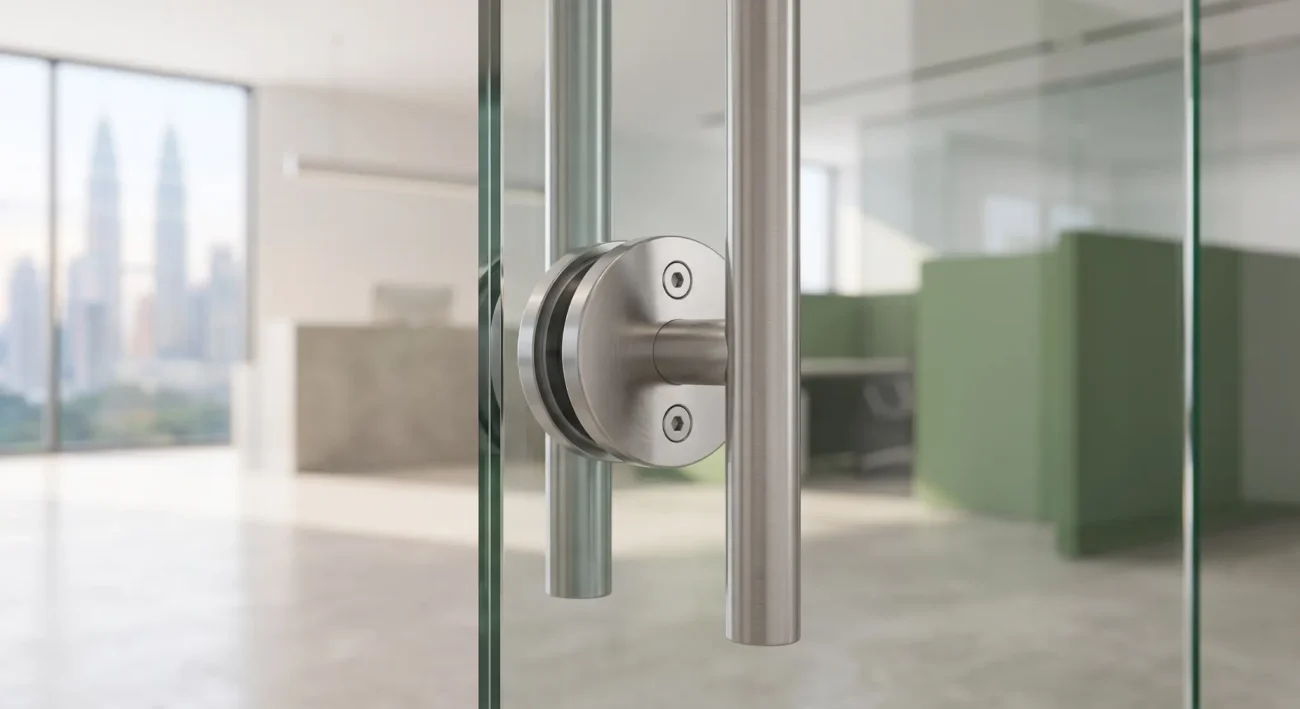
Glass door handles for frameless doors are fixed to the glass panel using through-glass bolt fixing (bolts through pre-drilled holes in the glass) or surface-bonded fixing (adhesive-bonded handle backplates, common for lighter handles on thinner glass).
Through-Glass Bolt Handles (D-Pull and Bar Handles)
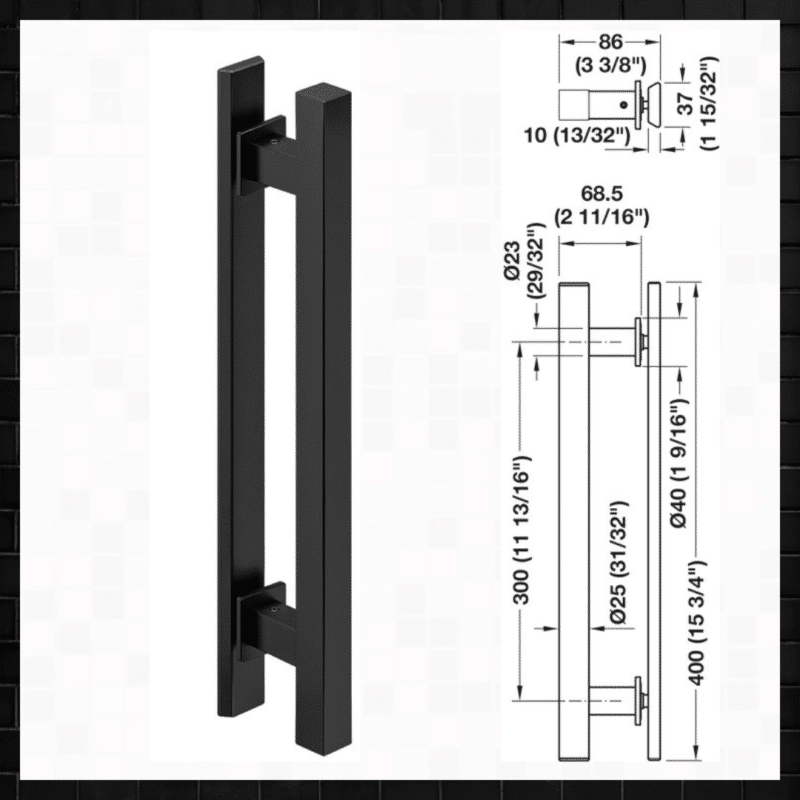
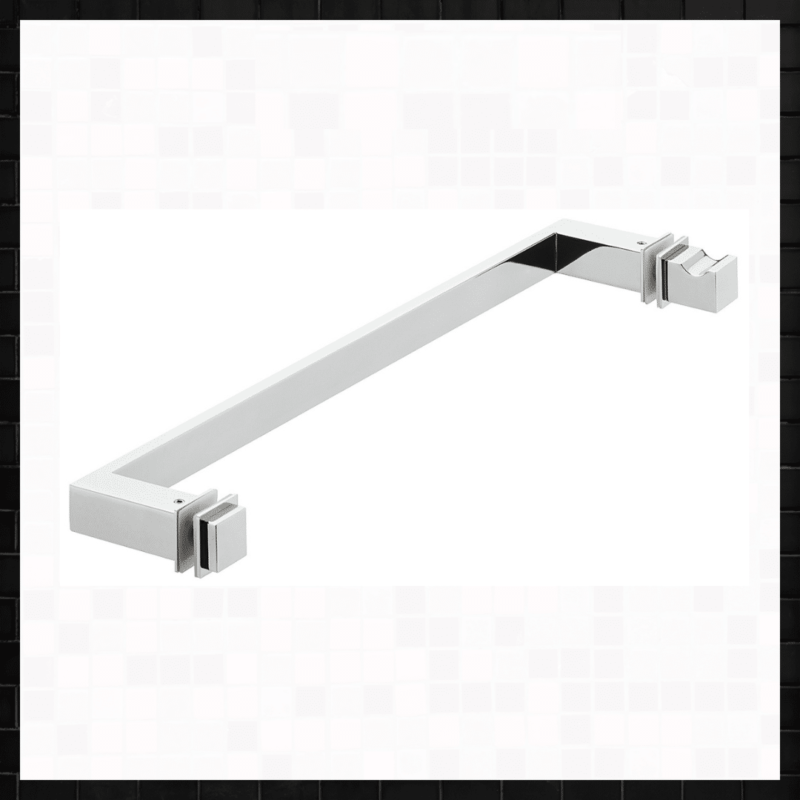
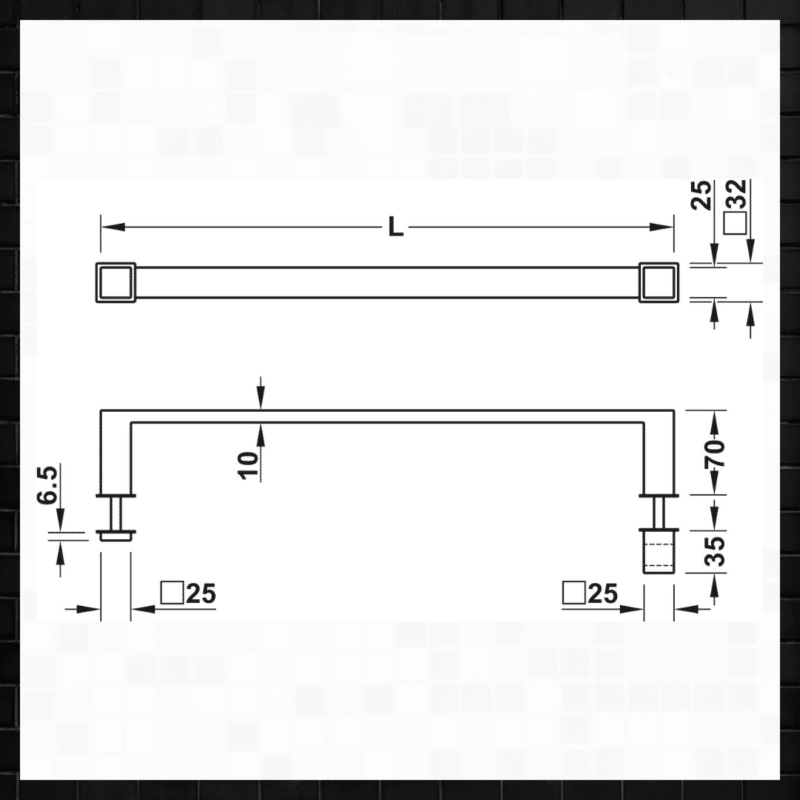
The most common glass door handle in Malaysian commercial properties. A long pull handle — typically 300mm to 1,200mm in length — is fixed through the glass panel by two or three fixing bolts. The bolts pass through pre-drilled holes in the glass, with cover roses or escutcheons on each face providing a finished appearance.
Finish options: 304 or 316 stainless steel (standard for Malaysian commercial glass doors), matte black (increasingly specified for modern interiors), brushed brass (hospitality and premium retail).
Handle length: For a single door panel, a 300–600mm pull handle is standard. For a double door set, a 1,200mm or through-door handle (connecting both door faces) is the common specification — it allows pushing from one face and pulling from the other without separate handles.
Patch Handle (Clamp-Fixed)
A patch-style handle that clamps to the glass edge rather than requiring through-holes. Used for thinner display case glass (4–8mm) where drilling would weaken the panel, or for retrofit applications where the original glass was not specified with handle holes.
Load limit: Clamp-fixed patch handles are not suitable for heavy doors or high-frequency commercial traffic — they rely on friction and adhesive rather than through-glass bolts. Suitable for display cases, low-traffic office interior doors, and residential glass cabinet handles.
Glass Door Locks
Patch Lock (Frameless Glass Door Lock)
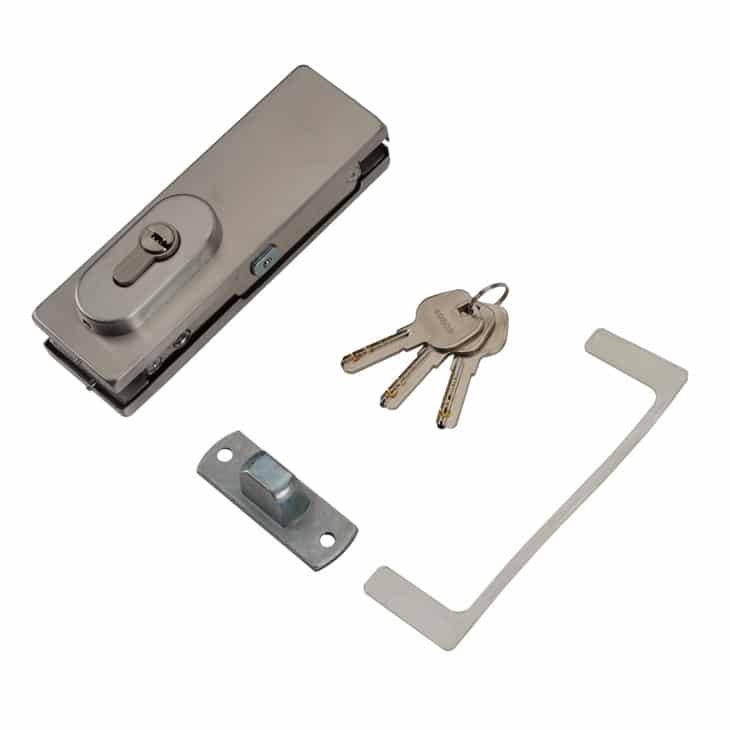
A patch lock is a lock mechanism that fixes to the glass panel via through-glass bolts, with a bolt or hook that engages a strike in the floor, the door frame, or an adjacent glass panel. Used on single-point locking frameless glass doors in Malaysian offices and retail.
Bolt types:
- Floor bolt: The bolt from the patch lock engages a recessed floor strike plate. The most common configuration for single-point glass door locking in Malaysia. Clean appearance — no visible strike on the door frame.
- Frame strike: The bolt engages a strike fixed to the door frame or an adjacent fixed glass panel. Used when floor bolt installation is not practical (raised floor, tile constraints).
Key cylinder options: Most patch locks accept a standard profile cylinder (similar to standard door locks) allowing keyed locking from the outside. Inside opening is typically via a thumb turn on the inside patch face.
Frameless Glass Door Lock with Pull Handle
A combined lock and pull handle unit — a single patch assembly that provides both the door handle and the locking mechanism. The key cylinder is incorporated into the handle body. Common in Malaysian retail shopfronts, office glass entrance doors, and premium residential glass doors.
Glass Door Electromagnetic Lock (Magloc)
An electromagnetic lock (magloc) consists of an electromagnet mounted on the door frame or overhead beam, and a steel armature plate on the glass door (typically bonded to the glass face). When energised, the magnet holds the door closed with a force of 280–600kg — effectively locked without any mechanical bolt. Releasing the magnet (via access control, exit button, or timed release) allows the door to open freely.
Common in Malaysia: Office and commercial building access control systems, secured glass door partitions in co-working spaces, and secured display rooms. The electromagnetic lock is always paired with an access control reader — RFID card, fingerprint, or PIN — on the outside, and an emergency break-glass or exit button on the inside.
Glass Door Accessories — Floor Guides and Door Stops
Floor Guide (Patch Pivot)
For frameless glass doors hinged on wall-mounted patch hinges, a floor guide at the base of the door edge provides lateral alignment — preventing the door from swinging sideways off the hinge axis. Two types:
- Recessed floor guide: Sits flush in a routed channel in the floor tile or screed. Invisible when the door is open. Preferred finish in Malaysian tile-floored offices and homes.
- Surface-mount guide: A stainless steel pivot channel fixed to the floor surface. Quick to install, no floor routing required. Slightly visible.
Glass Door Stoppers
Door stoppers prevent the glass door from swinging too far and impacting the wall, adjacent glass panel, or structural element. Two options:
- Wall-mounted door stopper: Fixed to the wall at the correct position to arrest the door at the desired open angle. Simple, effective.
- Floor-mounted door stopper: Fixed to the floor — used when wall mounting is not possible due to the door swing arc.
Specify rubber-tipped door stoppers — bare metal-on-glass contact causes glass damage. For heavy commercial glass doors, specify a heavy-duty buffer rated for the door weight and impact.
How to Specify Glass Door Hardware in Malaysia
Step 1 — Confirm glass thickness and weight. All patch fittings, hinges, and handles are rated for specific glass thicknesses. Confirm the glass specification (thickness and temper) before selecting hardware. Provide dimensions to Acts ID for weight calculation.
Step 2 — Identify the application. Office entrance / retail shopfront → floor spring pivot + patch handle + patch lock or magloc. Bathroom shower screen → glass-to-glass hinge (316 SS) + D-pull handle (316 SS) + floor bolt or bolt lock. Interior glass partition door → wall-fixed patch hinge + pull handle + patch lock or magloc. Display case → clamp-fixed patch hinge + small patch handle + cam lock.
Step 3 — Select finish for environment. Indoor, air-conditioned office → 304 stainless steel or matte black. Bathroom, wet area → 316 stainless steel only. Coastal property or semi-outdoor → 316 stainless steel only. Premium hospitality or retail → brushed brass or brushed gold (confirm coating type — PVD coating outperforms electroplated finishes in Malaysian humidity).
Step 4 — Confirm hole positions with glass supplier. All through-glass bolt fixing requires pre-drilled holes. Provide hole positions to your glass supplier or tempered glass fabricator before the glass is ordered. Holes cannot be added after tempering.
Step 5 — Specify access control if required. If the glass door requires access control (office security, secured areas), specify an electromagnetic lock with an appropriate access control reader. Acts ID can advise on compatible magloc and reader combinations.
Where to Buy Glass Door Hardware in Malaysia
Acts ID Hardware stocks a comprehensive range of glass door hardware — patch hinges, floor springs, D-pull handles, patch locks, electromagnetic locks, floor guides, and door stoppers — in 304 stainless steel, 316 stainless steel, and matte black finishes. We supply to ID firms, glass fabricators, contractors, and building owners across Malaysia from Ulu Tiram, Johor.
Browse our door hardware range on our site, or WhatsApp our team at +6013-790 1266 with your glass thickness, door dimensions, and application for specific product recommendations. Free delivery on orders above RM 300 (West Malaysia).
Frequently Asked Questions
What hardware do I need for a frameless glass door in Malaysia?
A frameless glass door requires: patch hinges (wall-fixed or floor pivot), a pull handle (through-glass bolt fixed), and a lock (patch lock with floor bolt, or electromagnetic lock for access-controlled applications). All components must be specified for the actual glass thickness and panel weight. For bathroom glass doors, all hardware must be 316 stainless steel minimum.
Can I drill holes in tempered glass for door hardware in Malaysia?
No. Tempered glass cannot be drilled after tempering — it will shatter. All hardware hole positions (for patch hinges, handles, and patch locks) must be specified before the glass is sent to the tempering oven, and the holes are drilled by the glass fabricator in the annealed state. When ordering glass, provide all hardware hole positions and diameters to your glass supplier.
What is a patch fitting for glass doors?
A patch fitting is a clamping hardware component that fixes to a glass panel at a pre-drilled hole position, using two clamping plates and throughbolts to grip the glass panel. Patch fittings are used for hinges, handles, locks, and pivot points on frameless glass doors — they allow hardware to be securely fixed to glass without frames or adhesive.
What is the best glass door hinge for a Malaysian bathroom shower screen?
For a frameless shower screen in Malaysia, specify a glass-to-glass patch hinge or wall-to-glass patch hinge in 316 (marine grade) stainless steel. The 316 grade resists long-term exposure to water, steam, soap residue, and bathroom cleaning chemicals. Chrome-plated or 304 stainless steel hinges in direct shower spray zones will corrode within 2–3 years in Malaysian conditions.
How heavy can a frameless glass door be in Malaysia?
Standard wall-mounted patch hinges in Malaysia are rated for glass panels up to 80–100kg per pair of hinges (two hinges per door). Heavy-duty floor pivot systems handle doors up to 200kg or above. A 900×2100mm panel of 12mm tempered glass weighs approximately 57kg — within standard patch hinge load ratings. For larger or thicker panels, confirm the actual panel weight and specify hardware accordingly.